

By Claudia Bensimoun

Meet the Xoloitzcuintli (Xolo): temperament, sizes (toy/mini/standard), skin care for hairless dogs, training, CHIC-style health checks, genetics, and best home fit. Updated 2026.
Xoloitzcuintli (Xolo)
” The Xolo possesses a clean, graceful outline, equally combining elegance and strength. There are two varieties, hairless and coated, identical except for coat and dentition. In the hairless variety, the principal characteristic is the total or almost total absence of hair. The coated variety is covered by a short, flat coat. In conformation, all three sizes are lean, sturdy, well muscled with a spacious ribcage, and moderate bone,” says the AKC.
The Xoloitzcuintli (pronounced “show-low-eets-QUEENT-lee”), often called the Xolo, is one of those breeds that looks like it walked out of history and into your living room with a wise little grin. Ancient roots, modern companion energy, and a very unique coat situation (sometimes no coat at all).
If you’re considering an Xolo, here’s the truth: they can be phenomenal family dogs, but they’re not “set it and forget it.” You’re signing up for brain + body enrichment, skin care routines, and a dog that notices everything.
Quick ID: What is an Xolo?
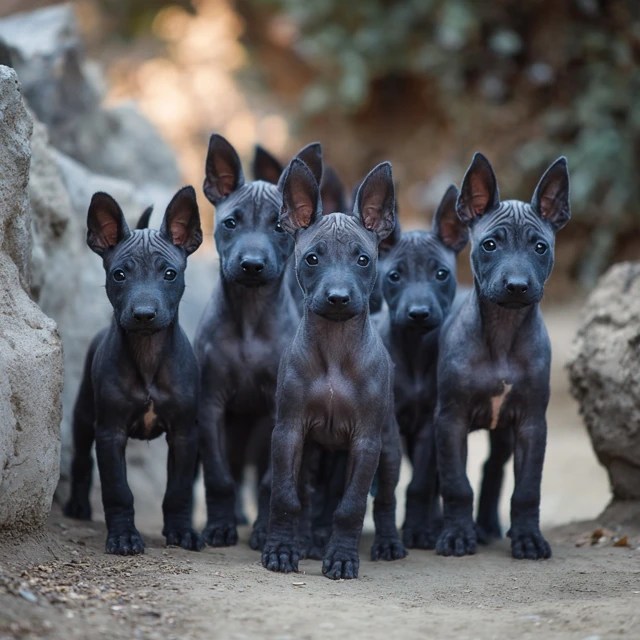
The Xoloitzcuintli (Xolo) is an intelligent, alert companion breed from Mexico. It comes in toy, miniature, and standard sizes and in both hairless and coated varieties. Hairless Xolos need simple skin care and weather protection; all Xolos do best with daily training and enrichment.
- Origin: Mexico (deep historical roots)
- Varieties: Hairless and coated
- Sizes: Toy, Miniature, Standard (one breed, different sizes)
- AKC group: Non-Sporting
- UKC group: Sighthound & Pariah Dog Group
- FCI classification: Group 5 (Spitz and primitive types), Primitive type
Temperament: the calm guardian vibe
Many adult Xolos settle into a calm, steady temperament, but puppies can be busy little fireworks. This is a breed that tends to be:
- Alert and observant (often a natural watchdog)
- Bonded to their people (they like “their” humans)
- Smart and sometimes “selectively cooperative” if training is inconsistent
- Reserved with strangers if not socialized thoughtfully
The best Xolos feel like confident housemates: affectionate, steady, and tuned into your routines. The toughest Xolos are those that are under-exercised, under-socialized, or confused by mixed rules.
Best home fit
A Xolo is usually a great fit if you:
- want a clever companion who likes training games
- can do daily walks + mental work
- are okay with skin care and weather management (sun + cold)
Not ideal if you:
- want a dog that thrives on being ignored all day
- don’t enjoy training
- dislike grooming routines (yes, hairless is still grooming)
Xolo Daily Needs Mix (Minutes/Day)
Xolo Daily Needs Mix (Minutes/Day)

Illustrative daily routine split for a well-balanced Xolo: structured walk, sniffing, training, and play/enrichment.
Genetics
The Xolo’s hairless look is linked to a genetic variant associated with ectodermal development (hair and teeth). Research has identified a mutation in FOXI3 in hairless dog breeds, and it’s also tied to common “hairless side effects” like missing or abnormal teeth in some lines.
Practical takeaway: in hairless Xolos, skin care and dental health should be part of routine ownership, and ethical breeders should be transparent about coat outcomes and dental expectations.
Closest breeds

American Hairless Terrier
If you like the Xolo’s “ancient, minimal-coat, alert companion” energy, also look at:
- Peruvian Inca Orchid (similar hairless concept, similar skin-care reality)
- Chinese Crested (smaller, hairless/coated varieties; more toy-companion oriented)
- American Hairless Terrier (hairless option with terrier energy)
- Basenji (not hairless, but has a primitive-dog feel and independence)
Sizes and varieties: hairless and coated, all in one breed
In the AKC, the Xoloitzcuintli is recognized as one breed that comes in three sizes (toy, miniature, and standard) and two varieties (hairless and coated). That’s important, because the AKC did not split the hairless and coated types into separate breeds. Instead, they’re treated as two expressions of the same breed standard, which means you’ll see all sizes and both coat types under the same Xoloitzcuintli “umbrella.”
For owners, this is helpful: you can choose the size that fits your home and lifestyle while still getting the same signature Xolo traits, and you can also decide whether you prefer the low-shedding, skin-care-focused hairless variety or the short-coated variety with more traditional grooming needs.
Hairless Xolo basics
Hairless Xolos can get:
- sunburn (yes, truly)
- dry skin or irritation if bathed too often
- acne/comedones from heavy products or clogged pores
Coated Xolo basics
Coated Xolos have a short coat and are lower-maintenance for skin, but they still benefit from routine brushing and basic dog skincare.
Skin care that actually works
Hairless skin is not human skin, but it also isn’t “no maintenance.” Keep it simple.

A simple starting rhythm for hairless Xolo care. Adjust based on climate, skin sensitivity, and your vet’s guidance.
Weekly (or every 1–2 weeks):
- Gentle bath (lukewarm water, mild dog cleanser)
- Pat dry, don’t scrub like you’re sanding a table
After bathing:
- Light, non-greasy moisturizer (thin layer)
- Skip heavy oils that trap dirt and clog pores
Daily:
- Quick check for redness, bumps, dryness, or sun irritation
Sun + cold:
- Sun: shade, timing (morning/evening walks), and dog-safe sun protection when needed
- Cold: sweaters/jackets are not fashion, they’re equipment
Exercise + training: the “brain needs a job” rule
A Xolo without a job invents one. Often it’s: barking at windows, pacing, or redecorating with your shoes.
A simple daily formula
- Walk (structured): 20–45 minutes depending on size/age
- Sniffy time (decompression): 10–20 minutes
- Training: 5–10 minutes, 1–2 times per day (short and upbeat)
Training focus that helps most:
- recall foundations
- calm greetings
- place/mat work
- confidence-building socialization
Health risks and the simplest screening plan
Xoloitzcuintli health risks tend to cluster around a few predictable areas, and most of them are manageable if owners plan ahead. One of the biggest “breed-specific” topics is skin health, especially in hairless Xolos.
Because the skin is exposed, some dogs are prone to dryness, irritation, clogged pores, and acne-like bumps (comedones), particularly if they’re bathed too often, scrubbed harshly, or covered in heavy oils that trap dirt. Sun exposure is another real issue: light-skinned hairless dogs can sunburn, so owners usually rely on shade, walk timing (early/late), and dog-safe sun protection when needed. On the flip side, cold weather can trigger discomfort, so sweaters and jackets aren’t just cute. They’re functional gear for many hairless Xolos.
Another important consideration is dentition (teeth). In hairless varieties, missing teeth or unusual tooth development can be more common, which can increase the importance of routine dental care: consistent brushing, vet dental checks, and watching for gum inflammation.
Beyond skin and teeth, Xolos still share a lot of the “normal dog” risks, including orthopedic concerns like hip issues (more relevant in larger/standard dogs), plus general joint wear as they age. Responsible breeders commonly emphasize health screening and transparent family history, while owners can reduce strain by keeping their Xolo lean, building muscle with age-appropriate exercise, and avoiding excessive jumping during puppy growth stages.
Like many alert, bonded breeds, Xolos can also be sensitive to stress if they’re under-socialized or left without enough enrichment, which can show up as reactivity, anxiety, or destructive habits. That’s not a disease, but it is a real “health and quality-of-life” factor.
The best preventive approach is steady routines, early positive socialization, and giving the dog a job to do. Overall, the Xolo is often a hardy breed, but it rewards owners who treat skin care, dental care, and smart conditioning as part of normal, ongoing wellness.
No breed is “health-proof.” For Xolos, most owners pay attention to:
- hips (especially larger dogs)
- eyes
- skin health (especially hairless)
- dentition (missing or abnormal teeth are common in hairless dogs)
If you’re choosing a puppy, ask the breeder for proof of screening and discuss what they’ve observed in their lines.
Best Dog Food for a Xoloitzcuintli
Xolos don’t have one magical “breed-only” diet, but they do have a few traits that make food choice more important than people expect: they’re often lean, athletic dogs with a noticeable need for steady energy, and hairless Xolos can be prone to skin dryness or irritation, which makes nutrition and body condition extra visible.
The best plan is to choose a high-quality, AAFCO-complete food that matches your Xolo’s life stage (puppy, adult, senior) and activity level, then adjust portions to keep a defined waist and good muscle tone. Many owners do well with a moderate-to-high protein formula, balanced fats, and clearly named animal proteins (chicken, turkey, beef, salmon) rather than vague “meat meal” blends.
If your Xolo is hairless and you’re managing skin, look for diets that support skin and coat health through adequate essential fatty acids (omega-3 and omega-6). You don’t need to chase trendy ingredients, but you do want consistency: sudden food hopping can lead to digestive upset and confuse what’s actually helping the skin.
If your dog is itchy, flaky, or frequently inflamed, consider a vet-guided trial of a limited-ingredient diet or a sensitive-skin formula, because it’s easier to identify triggers with fewer variables. For picky eaters, many Xolos respond well to adding a small topper like warm water, a spoon of wet food, or a veterinarian-approved topper rather than swapping brands weekly.
Quick “Xolo food picks” framework (no brand hype):
- Best for active adults: a performance-style adult formula with higher calories and protein.
- Best for sensitive stomach/skin: limited-ingredient or sensitive-skin formula with a single primary protein.
- Best for seniors: senior formula with joint-supportive nutrition and careful calorie control.
- If you feed fresh/raw: do it only if it’s properly balanced; an unbalanced home diet can show up quickly in skin, teeth, and muscle condition.
Bottom line: the “best” food is the one your Xolo thrives on with stable digestion, a healthy stool, steady energy, and skin that isn’t constantly dry or inflamed. If you see chronic itching, recurrent ear issues, or persistent GI problems, that’s a vet conversation, not just a shopping decision.
Best Fresh Dog Food for Xoloitzcuintli (Xolo)
Fresh food can be a great match for Xolos because it’s typically high-moisture, very palatable, and easy to portion, which helps keep this naturally lean, athletic breed in ideal body condition.
For hairless Xolos, owners often like fresh diets because hydration and balanced fats can support overall skin comfort (it’s not a cure-all, but good nutrition makes skin issues easier to manage). The key is choosing a brand that clearly states its recipes are complete and balanced for your dog’s life stage and that it meets recognized nutrition standards (not just “looks healthy”).
Quick picks (fresh)

- The Farmer’s Dog – Strong choice if you want simple, delivered fresh meals and portion guidance.
- Ollie – Great if your Xolo is picky and you want lots of flavor variety and customization.
- JustFoodForDogs – Popular with owners who like a more “clinical” feel and clear vet-nutrition messaging.
- Nom Nom – Often chosen for tailored plans and consistent quality control messaging.
How to choose the right fresh plan for your Xolo
1) Match calories to size + lifestyle
Toy/miniature Xolos can gain quickly if overfed, while standards can need more calories if they’re active. Fresh food is dense, so measure portions carefully and adjust every 2–3 weeks based on body condition.
2) Prioritize protein quality
Look for named proteins (turkey, beef, chicken, pork, fish). If your Xolo has sensitive digestion, start with one primary protein and stay consistent for a month before switching.
3) Skin-sensitive? Keep ingredients simple
If your hairless Xolo is prone to bumps, itchiness, or dry patches, don’t add a bunch of toppers at the same time. Keep the diet steady so you can actually tell what helps.
4) Transition slowly
Even “great” fresh food can cause soft stools if you switch too fast. Aim for a slow transition:
- Days 1–2: 25% fresh / 75% old
- Days 3–4: 50% fresh / 50% old
- Days 5–6: 75% fresh / 25% old
- Day 7+: 100% fresh
Fresh vs kibble for Xolos (simple truth)
Fresh isn’t automatically better than a high-quality kibble. The best diet is the one your Xolo does best on with:
- steady energy
- good stools
- healthy weight and muscle
- skin that isn’t constantly irritated
Best Grooming Tools for Xolos (Hairless and Coated)

“Hairless” doesn’t mean “no grooming,” it just changes what grooming looks like. For a hairless Xolo, grooming is simple skin maintenance: gentle cleansing, maintaining moisture balance, and protecting the skin barrier from harsh products. For a coated Xolo, grooming is straightforward, but the right tools keep shedding and skin oils under control.
Hairless Xolo: the simplest grooming kit
1) Gentle cleanser or dog shampoo (fragrance-light)
Use a mild dog cleanser and avoid over-bathing. Hairless skin can dry out or get irritated if you scrub too often or use harsh formulas. A gentle wash as needed is usually enough.
2) Soft microfiber towel
Pat dry instead of rubbing aggressively. Friction can irritate sensitive areas and make redness worse.
3) Light, non-greasy moisturizer
Use a thin layer after bathing if skin gets dry. The goal is comfort and barrier support, not a slippery oil coat that traps dirt and clogs pores.
4) Optional: soft silicone grooming mitt
Some owners like a soft mitt for light exfoliation and removing debris, but keep it gentle. You’re not trying to sand the dog.
5) Weather gear as “grooming equipment”
For hairless Xolos, a well-fitting sweater/jacket is basically part of the grooming toolkit because it prevents dryness and discomfort in cold weather, and it reduces skin irritation from environmental exposure.
Coated Xolo: easy tool set
1) Soft bristle brush or rubber curry brush
A short coat responds well to a gentle brush that removes loose hair and distributes skin oils without scratching.
2) Fine-tooth metal comb (quick check tool)
Not always necessary for short coats, but helpful for checking friction areas (collar area, behind ears) and removing small debris.
3) Nail grinder or clippers
Xolos are athletic and benefit from short nails for healthy movement. If nails get long, it can affect posture and joints over time.
4) Dog-safe ear cleaner + cotton pads
Weekly quick checks help prevent wax buildup and irritation.
Dental tools (important for both, especially hairless lines)
Because dentition differences can be more common in hairless varieties, dental care deserves its own “tool list”:
- Dog toothbrush + enzymatic toothpaste
- Dental chews (as appropriate for your dog’s chewing style)
- Veterinary dental checks on schedule
Genetics: why hairlessness happens

In Xolos (and a few other classic hairless breeds), hairlessness is tied to a mutation affecting ectodermal development, the system that builds things like hair follicles and teeth. Researchers have linked the dominant hairless trait in these breeds to a frameshift-causing variant in FOXI3, a gene involved in developing hair and teeth
This hairless trait behaves as a semi-dominant (incompletely dominant) variant: dogs with one copy of the mutation are typically hairless, but dogs with two copies are essentially never seen because the homozygous state is embryonic lethal (the embryos don’t survive early pregnancy and are resorbed). That’s why hairless Xolos are usually heterozygous, carrying one “hairless” copy and one “coated” copy of the gene.
What this means in real life (practical implications for owners): Hairless Xolos may also show dentition differences because the same genetic pathway influences teeth, so missing teeth or unusual tooth shape can be more common in hairless lines compared with coated dogs. And because hairless dogs carry one coated copy, coated puppies can appear even in hairless lines, which is normal and expected with this inheritance pattern.
This is exactly why ethical breeders talk openly about coat outcomes and dental expectations, and why “perfectly hairless” should never be the only breeding goal. Prioritizing overall health, temperament, and sound structure matters far more than chasing an ultra-smooth look.
Closest breeds (if you love the Xolo vibe)
If you’re drawn to the Xolo’s look and ancient, primitive-dog feel, you might also explore:
- Peruvian Inca Orchid (similar hairless concept, similar care realities)
- Chinese Crested (smaller, companion-focused, also hairless variety)
- Basenji / primitive-type spitz (not hairless, but often similar independence and alertness)
Owner checklist: before you commit
Before you commit to a Xoloitzcuintli, it helps to do a quick “real life” checklist, not just a “love at first photo” checklist. Start with training: Xolos are smart, observant, and they notice patterns fast, which means your habits become their habits.
For the first 12–18 months, you’ll need consistent rules, short daily training sessions, and follow-through on basics like recall, polite greetings, and calm behavior at the door. If you enjoy training games, you’ll love this breed. If you want a dog who automatically “comes pre-programmed,” a Xolo can feel stubborn when it’s actually just under-guided.
Next, be honest about skin and weather management, especially if you’re choosing a hairless Xolo. Hairless doesn’t mean low maintenance, it means different maintenance. You’ll be checking skin for dryness or bumps, keeping bathing gentle and not too frequent, and protecting them from extremes. In hot sun, your plan is usually shade and smarter walk times first, and in cold weather it’s sweaters or jackets so they stay comfortable. If you’re okay with a simple routine, it’s easy. If you hate any “extra steps,” it will feel annoying fast.
Temperament and social comfort matters too. Many Xolos are watchful and naturally reserved with strangers, which is not a flaw, it’s part of their vibe. But it does mean you’ll want early, positive socialization: controlled introductions, rewarding calm behavior, and teaching them that guests are normal. If you live in a busy building, have lots of visitors, or want a dog who loves everyone instantly, you’ll need to be extra intentional so that “reserved” doesn’t turn into reactive.
Finally, ask yourself if you can give daily mental stimulation in addition to physical exercise. A Xolo can be surprisingly athletic, but the bigger need is often their brain: short training sessions, puzzle feeders, scent games, “find it” searches, or a structured routine where they feel like part of a job. Without that, boredom shows up as barking at noises, guarding windows, or creating their own entertainment (usually with your stuff).
If you can confidently answer yes to these questions, a well-bred, well-socialized Xolo can be an incredible companion: calm in the house, funny in small moments, athletic when it counts, and tuned into you like a little radar dish that always wants to know what’s next.
Ask yourself:
- Can I commit to consistent training for the first 12–18 months?
- Am I okay with skin care and managing sun/cold exposure?
- Do I want a dog that’s watchful and sometimes reserved with strangers?
- Can I provide daily mental stimulation, in addition to physical exercise?
Xoloitzcuintli Rescue and Adoption
If you love the Xoloitzcuintli but want to adopt, rescue can be a great path, especially if you’re open to an adult dog with a known temperament. Xolos are still a relatively rare breed, so they may show up less often in local shelters, but they do appear through owner surrenders, breed networks, and occasional rescue placements. When adopting, plan for a decompression period.
Many Xolos are naturally watchful and can be reserved with strangers, and a rescue dog may need extra time to settle into a new routine. The best approach is calm structure: a quiet “safe zone,” predictable schedules, gentle introductions, and short confidence-building training sessions.
If you’re adopting a hairless Xolo, ask what products they’ve used for skin (and whether the dog has dealt with dryness, clogged pores, or sun sensitivity). If you’re adopting a coated Xolo, grooming is simpler, but you still want to ask about handling comfort, socialization, and noise sensitivity. Either way, schedule a vet visit early so you can set a baseline for skin, teeth, joints, and overall wellness.
Top 10 male Xolo names
- Xólotl (the namesake vibe)
- Diego
- Aztec
- Koa
- Cairo
- Obsidian (“Obi” for short)
- Zorro
- Mako
- Atlas
- Sombra
Top 10 female Xolo names
- Luna
- Frida
- Xena
- Coco
- Naya
- Sage
- Sol
- Amara
- Dalia
- Nyx
FAQs:Xoloitzcuintli (Xolo) Breed Guide 2026: Temperament, Sizes, Skin Care, Health + Genetics
Are Xolos hypoallergenic?
No dog is truly hypoallergenic. Hairless dogs may shed less hair, but allergies are usually triggered by dander and saliva, not just fur.
Do Xolos need sunscreen?
Sometimes, yes, especially light-skinned hairless dogs in intense sun. Many owners first focus on shade and timing (morning/evening walks) and use dog-safe sun protection as needed.
Do hairless Xolos get acne?
They can. Over-bathing and heavy oils can clog pores. Keep the routine simple and avoid greasy products.
Are Xolos good with kids?
Often, yes, when handled respectfully and with consistent training. As with any breed, supervision and teaching children “dog manners” are essential.
Can Xolos live in cold climates?
Yes, but hairless dogs need warm gear and indoor living. They’re not “yard dogs.”
What group is the Xolo in (AKC/UKC/FCI)?
AKC: Non-Sporting
UKC: Sighthound & Pariah Dog Group
FCI: Group 5, primitive typ
Conclusion: Is the Xolo Right for You?
The Xoloitzcuintli isn’t a “trend” breed or a low-effort companion. It’s an ancient, thoughtful dog with a deep bond to its people, strong instincts, and very real care needs. When bred responsibly and raised with structure, the Xolo is calm, athletic, emotionally tuned-in, and surprisingly funny. When misunderstood or under-stimulated, it can become reserved, anxious, or frustrated.
This breed does best with owners who value consistency over shortcuts: steady training in the first year, daily mental enrichment, mindful socialization, and realistic expectations about skin care, health screening, and genetics. The hairless trait is fascinating but should never overshadow temperament, structure, and overall wellbeing.
Whether you’re drawn to the Xolo for its history, its elegance, or its unique appearance, the best outcomes come from thoughtful choices. Choose ethical breeders or reputable rescues, feed a diet that supports lean muscle and skin health, and invest time in building trust and routine. Do that, and a Xolo won’t just live with you—it will attach to you, quietly watching, learning, and moving through life at your side like a small, ancient shadow.
Images created by Claudia Bensimoun using Midjourney (2026). All rights reserved.© 2026 BarkUpToday / Claudia Bensimoun. All rights reserved.Original infographics and charts created for BarkUpToday. Do not reproduce without permission.
Oh, these are gorgeous! But sunburn, poor things 🙁
I recently watched a documentary about these dogs, according to it, these dogs are still around because the natives believe that they have healing powers. Was a really interest documentary.
Love that mum and pup (or just different size buddies?) shot. Adorable AND regal….all at once!
You’ve been nominated for the Beautiful Blogger Award. Info here: http://me0wz.wordpress.com/2012/08/29/beautiful-blogger-award/