Affiliate disclosure: This article contains affiliate links. If you purchase through these links, BarkUpToday may earn a commission at no additional cost to you.
Quick Answer: Can Dogs Eat Thanksgiving Turkey?
Can dogs eat Thanksgiving turkey? Yes, dogs can safely eat a small amount of plain, cooked, boneless, skinless turkey meat. The danger on Thanksgiving is rarely the meat itself. It is everything that comes with it: fatty skin and drippings, onion- and garlic-laced stuffing and gravy, cooked bones, kitchen string, packaging, and a carcass left within reach. The safest plan is to set aside a few pieces of plain white meat for your dog before anything is seasoned, then keep the rest of the bird, and its trash, behind a closed door.
Key Takeaways
- Safe to share: plain, unseasoned, boneless, skinless turkey breast in small, bite-size pieces.
- Never share: turkey skin, bones, the carcass, drippings, gravy, stuffing, or brined, deep-fried, or smoked turkey.
- Biggest medical risks: pancreatitis from fat, injuries and blockages from cooked bones, and red blood cell damage from onion and garlic.
- Most overlooked risk: non-food items that smell like turkey, including string, oven bags, foil, netting, and absorbent pads.
- How much: treats, including table food, should stay under 10% of a dog’s daily calories, according to the World Small Animal Veterinary Association.
- If your dog gets into the turkey: call your veterinarian or an animal poison control line right away, and don’t induce vomiting unless a professional tells you to.

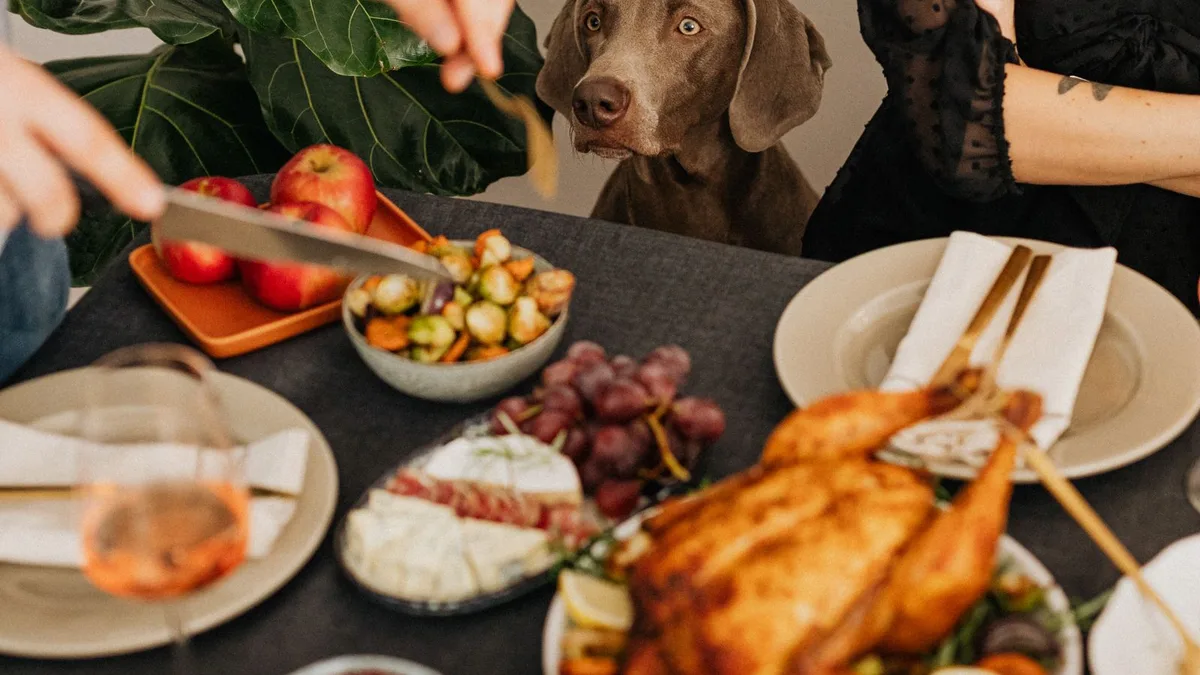
So, can dogs eat Thanksgiving turkey? Most articles stop at “yes, if it’s plain,” which isn’t very useful on the fourth Thursday of November. A dog doesn’t encounter “turkey” in the abstract. It encounters a 15-pound bird that spends a day thawing on the counter, soaking in salt water, roasting in a pan of butter, sitting on a carving board, and finally collapsing into a trash bag full of string and bones.
Each of those moments carries its own risk. The American Veterinary Medical Association’s Thanksgiving safety guidance warns that a carcass left on the table or in an easily opened trash can could be deadly to a pet. Veterinary toxicologists at the Pet Poison Helpline say their phones ring with the same holiday questions every year.
This guide walks through the turkey’s whole day, so you know what to guard, when to guard it, and what to do if your dog gets there first.
The Turkey’s Day, Stage by Stage
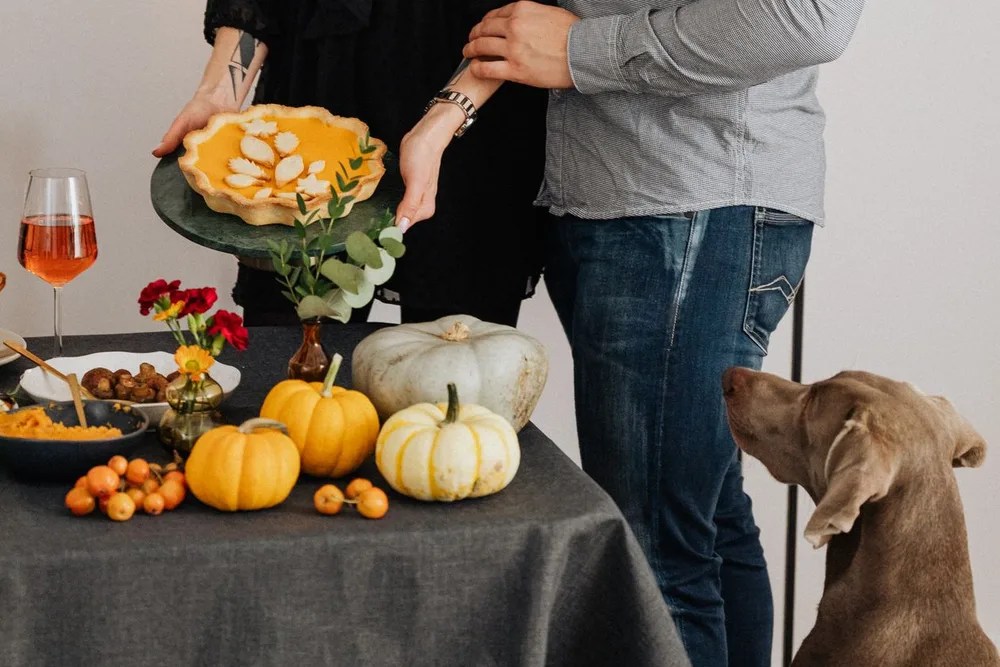
Think of Thanksgiving as a relay race in which the turkey passes through five sets of hands, and your dog is waiting at every handoff.
| Stage | What your dog can reach | Main risk | Verdict |
|---|---|---|---|
| 1. Thawing and prep | Raw bird, raw juices, giblet bag, plastic wrap, absorbent pads | Bacteria from raw poultry; swallowed packaging | Keep out of reach |
| 2. Brining and seasoning | Salt brine, butter rub, onion, garlic, herbs | Salt load; onion and garlic toxicity | Keep out of reach |
| 3. Roasting | Pan drippings, trussing string, oven bag, foil, pop-up timer | Fat; string and foil as foreign bodies | Keep out of reach |
| 4. Carving and the table | White meat, dark meat, skin, bones, stuffing, gravy | Pancreatitis; bone injuries; onion and garlic | Plain white meat only, in small amounts |
| 5. Cleanup and leftovers | Carcass, bones, string, greasy foil, leftover containers | Bones, fat, and packaging all at once | Secure trash outdoors or behind a locked door |
Only one item in that whole table is safe to share: plain, unseasoned, skinless, boneless white meat at stage 4. Everything else is something to manage.
The Three Ways Turkey Day Sends Dogs to the Vet
1. Fat and pancreatitis
The pancreas makes digestive enzymes. In pancreatitis, those enzymes activate inside the organ and inflame it. Cases range from a mild bout of vomiting to a severe, painful illness that needs hospitalization.
Turkey skin, pan drippings, gravy, and buttery stuffing are concentrated fat. The AVMA’s Thanksgiving guidance notes that fatty foods are hard for pets to digest. Pet Poison Helpline toxicologist Dr. Renee Schmid told AAHA’s NEWStat that turkey skin and leftover grease can trigger pancreatitis, which can be life-threatening.
To be accurate about the science: most canine pancreatitis cases have no identifiable cause. A 2022 review in the Journal of Veterinary Internal Medicine lists high-fat diets, table scraps, unusual foods, and eating trash among the suspected dietary risk factors, alongside obesity, certain medications, and breed. A fatty holiday meal doesn’t guarantee pancreatitis, but it’s one of the few risk factors you fully control.
2. Bones
Cooked poultry bones are brittle and can splinter. The AVMA warns that poultry bones can damage a pet’s digestive tract. Dr. Schmid lists injuries to the esophagus, stomach, and intestines. The most serious outcomes are choking, obstruction, and perforation. A whole carcass is the worst case, because it combines bones, fat, and seasoning in a single raid. Bones can also break teeth on the way in; our guide to dental disease in dogs explains which chews are too hard.
3. Things that aren’t food
A turkey carries a surprising amount of non-food material: plastic netting, trussing string, oven bags, foil, the giblet bag, the plastic pop-up timer, and the absorbent pad under a packaged bird. All of them smell like meat.
The AVMA specifically tells owners to bag strings, bags, and packaging with the carcass and secure them. String deserves extra respect because a long, thin object can bunch the intestines as they try to move it along, which is a surgical emergency. Never pull on string you can see hanging from a dog’s mouth or rear end; call your veterinarian.
Hidden Hazards Cooked Into the Bird
Even turkey meat stops being plain the moment it’s prepared for people.
Onion, garlic, leeks, and chives. These are the Thanksgiving ingredients the Pet Poison Helpline worries about most. Dr. Schmid calls them the biggest risk on the table, because they damage red blood cells and can cause anemia. They show up in stuffing, gravy, butter rubs, cavity aromatics, and seasoning blends as powder you can’t see. Meat that roasted next to an onion-stuffed cavity has absorbed those juices too.
Brine. Wet- and dry-brined turkeys are soaked or rubbed in heavy amounts of salt. That raises the sodium of every bite, and the leftover brine itself should never be left where a dog can drink it.
Butter, oil, and injections. Many recipes push butter under the skin or inject seasoned fat into the meat, so even “white meat” from a holiday bird may be richer than the plain chicken breast your dog is used to.
Deep-fried and smoked turkey. Both add fat or salt and seasonings. A taste of plain meat pulled from the center is the most you should consider sharing.
Stuffing and gravy. These combine nearly every hazard on this list: fat, salt, onion, garlic, and sometimes raisins, which are toxic to dogs, or bread made with rising dough.
The practical fix is simple. Before you season the bird or after it rests, set aside a few pieces of breast meat from the inside, away from the skin and cavity. If the whole turkey was brined or injected, consider skipping the turkey and giving your dog its own festive treat instead.
Which Dogs Need the Strictest Rules
Every dog should skip the skin, bones, and stuffing. Some should skip the turkey entirely, or get it only with their veterinarian’s blessing.
- Dogs with a history of pancreatitis. A previous episode is one of the clearest warning signs for another.
- Breeds linked to pancreatitis. The Journal of Veterinary Internal Medicine review lists Miniature Schnauzers, terrier breeds, Miniature Poodles, Dachshunds, Cocker Spaniels, and Alaskan Malamutes among breeds reported at higher risk of acute pancreatitis. Miniature Schnauzers are prone to high blood fats, which is a separate risk factor.
- Overweight dogs. Obesity appears on the same list of suspected risk factors.
- Dogs with diabetes, Cushing’s disease, or hypothyroidism, or those on medications linked to pancreatitis. Ask your veterinarian before sharing any rich food.
- Dogs on prescription or elimination diets. One holiday bite can undo weeks of a food trial for allergies.
- Small and toy breeds. The same bite of skin or stuffing is a far bigger dose for a 10-pound dog than for an 80-pound one, and that applies to onion and garlic as well as fat.
- Determined scavengers. Labradors and Beagles are famous for it, but any dog that has ever raided a trash can should be treated as a carcass risk.
Can Dogs Eat Thanksgiving Turkey Safely? How to Share It
If your dog is healthy and your veterinarian has no objection, a small taste of turkey can be part of the day.

- Choose plain white breast meat from the interior of the bird, away from the skin, cavity, and pan juices.
- Remove every bone fragment and every scrap of skin, fat, and string.
- Cut it into bite-size pieces suited to your dog’s size to reduce the choking risk.
- Serve it in your dog’s bowl, not from the table. This avoids teaching begging, which matters more than ever when guests are carrying plates at nose level.
- Keep the portion small. The World Small Animal Veterinary Association recommends that treats, including table food, make up less than 10% of a dog’s daily calories.
The WSAVA’s treat guidance translates that rule into a daily treat budget for an average healthy adult dog in ideal body condition:
| Dog’s weight | Daily treat calorie budget (WSAVA) |
|---|---|
| 4 kg (about 9 lb) | 24 kcal |
| 10 kg (about 22 lb) | 47 kcal |
| 20 kg (about 44 lb) | 79 kcal |
| 30 kg (about 66 lb) | 108 kcal |
| 40 kg (about 88 lb) | 134 kcal |
| 45 kg (about 99 lb) | 146 kcal |
That budget covers all extras for the day, including biscuits, chews, and training treats. For a toy breed, a couple of small pieces of turkey breast may be the entire allowance. If your dog is also getting a holiday chew, skip the turkey, or the reverse. For help choosing the everyday diet that the other 90% comes from, see how to choose healthy dog food.
Other foods veterinarians commonly consider safe on the side, served plain and in small amounts: green beans, carrots, and plain cooked sweet potato or potato with nothing added. Former AVMA president Dr. Douglas Kratt has noted these are generally fine as long as they aren’t in sauces. Plain canned pumpkin is another option; see can dogs eat pumpkin for portions.

Give Your Dog a Plate of Their Own
The easiest way to keep your dog away from the serving dishes is to give them a plate of their own. A complete turkey dog food delivers the flavor they are begging for, without the skin, bones, stuffing and gravy that cause the trouble. Serve it in their own bowl, away from the table, and count it inside the day’s treat budget above.
Blue Buffalo Homestyle Recipe Turkey Meatloaf Dinner with Garden Vegetables is a complete and balanced wet food with real turkey as the first ingredient, plus garden vegetables and whole grains. One can gives most dogs several holiday servings, and the rest keeps in the fridge for the days after. It is the simplest way to let your dog join the feast safely.

Blue Buffalo Family Favorites Turkey Day Feast copies the holiday plate itself — turkey in gravy with green beans, sweet potatoes and cranberry. It is grain-free, so treat it as a once-a-year holiday meal rather than an everyday food. Served in small portions inside the same treat budget, it lets your dog share the celebration without sharing the risks.

Hill’s Science Diet Sensitive Stomach & Skin Tender Turkey & Rice Stew is the gentlest option of the three, made for dogs whose stomachs react badly to rich food. It gives dogs with sensitive stomachs a turkey dinner of their own instead of scraps. If your dog has had pancreatitis or is on a prescription diet, ask your veterinarian before offering any new food. The recipe is complete and balanced, with rice for easy digestion.

A Dog-Proof Thanksgiving Kitchen Plan
Most Thanksgiving accidents aren’t caused by someone handing a dog a bone. They happen when the household is distracted, the counter is crowded, and nobody is watching the trash. A plan that assigns responsibility works better than good intentions.
The night before
- Thaw the turkey in the refrigerator or in a sink behind a closed door, never on a low counter.
- Pick a quiet room or crate space for your dog, with water, a bed, and a long-lasting dog-safe chew or food puzzle.
- Buy a trash can with a locking lid, or plan to take bags straight outside to a closed bin.
- Save your veterinarian’s number, your nearest 24-hour emergency hospital, and an animal poison control line in your phone. Our pet emergency plan guide covers what else to keep on hand.
While cooking
- Bag raw packaging, the absorbent pad, netting, and giblet wrapping immediately and take them outside.
- Pour off drippings and leftover brine into a sealed container rather than leaving the roasting pan on the stove.
- Set aside your dog’s plain portion of breast meat before anything goes on the table.
During the meal
- Ask guests not to feed the dog, and say why. A short, friendly note on the table works surprisingly well.
- Assign one person as “dog watch” during the busiest moments, such as carving and clearing.
- Watch the door. The AVMA notes that pets can slip out while guests come and go, so check that ID tags and microchip details are current.
Cleanup
- Strip the carcass, then double-bag it with all string, foil, and bones. Put it in a closed outdoor bin or behind a locked door, as the AVMA recommends.
- Don’t leave plates on the coffee table or low surfaces during the post-meal lull.
- Store leftovers in sealed containers on a high fridge shelf. The risk doesn’t end Thursday night; leftover turkey sandwiches and plates set down “for just a minute” carry the same hazards all weekend.
What to Do If Your Dog Got Into the Turkey
Stay calm and move quickly. Quick action and accurate information give your veterinarian the most options.
- Separate your dog from the food and remove whatever is left.
- Work out what was eaten. Note how much turkey, whether bones, skin, string, packaging, stuffing, or gravy were involved, and roughly when it happened. Take a photo of what’s left of the carcass or trash.
- Call your veterinarian or an emergency clinic right away. You can also contact the ASPCA Animal Poison Control Center (888-426-4435) or the Pet Poison Helpline (855-764-7661); both charge a consultation fee. If stuffing, gravy, or seasoning with onion or garlic was eaten, mention it specifically.
- Do not make your dog vomit unless a veterinary professional tells you to. Banfield Pet Hospital’s first-aid guidance is clear on this. Sharp bone fragments can injure the esophagus on the way back up, and home remedies such as hydrogen peroxide carry their own risks.
- Don’t feed bread or other “cushioning” foods unless your veterinarian advises it.
- Never pull on string or plastic visible at the mouth or rear end.
- Watch closely for 72 hours. Problems from fat, bones, and foreign bodies can show up hours or days later.
Warning signs that need urgent care
The AVMA lists sudden behavior changes, depression, pain, vomiting, and diarrhea as signs of distress after a holiday food incident. Also watch for:
- Repeated vomiting or retching without producing anything
- A hunched “prayer” posture, or pain when the belly is touched
- Refusing food or water
- Lethargy or weakness
- Straining to defecate, or blood in vomit or stool
- A swollen, tight abdomen
- Pale gums or unusual weakness in the days after onion or garlic exposure
If you see any of these, don’t wait for the holiday weekend to end. Go to an emergency clinic.
Frequently Asked Questions
Can dogs eat turkey skin?
No. Turkey skin is mostly fat, and it absorbs butter, salt, and seasonings during cooking. The AVMA warns that turkey skin, sometimes even a small amount, can trigger pancreatitis.
Is turkey gravy safe for dogs?
No. Gravy is made from fatty drippings and usually contains salt, onion, garlic, or seasoning blends. Store-bought “dog gravy” toppers are a safer way to make a meal feel special.
Can dogs eat turkey bones if they’re raw instead of cooked?
This article covers the Thanksgiving bird, which is cooked, and cooked poultry bones should never be given. Raw feeding is a separate, debated topic; raw poultry also carries a risk of bacteria such as Salmonella for both dogs and the people handling it. Discuss any raw-feeding plan with your veterinarian.
My dog ate a cooked turkey bone and seems fine. What now?
Call your veterinarian, even if your dog seems normal. They may recommend monitoring at home or an exam and X-rays, depending on your dog’s size and how much was eaten. Watch closely for vomiting, belly pain, lethargy, or straining over the next few days.
Can dogs eat dark meat turkey?
Dark meat is not toxic, but it is higher in fat than breast meat. For a holiday bird that has been basted and roasted in its own juices, plain white meat is the safer choice, especially for small dogs or those with any pancreatitis risk.
Can dogs eat brined or deep-fried turkey?
It’s best to avoid both. Brined turkey carries extra salt throughout the meat, and deep-fried turkey adds fat and often seasoning. If you want your dog to share in the meal, plain unseasoned breast meat cooked separately is the safest option.
Can puppies have Thanksgiving turkey?
A tiny piece of plain white meat is unlikely to harm a healthy puppy, but puppies have small treat budgets and sensitive stomachs. A puppy-appropriate treat is usually the better choice. Puppies are also enthusiastic chewers of string, foil, and packaging, so kitchen management matters even more.
Does turkey make dogs sleepy?
There’s no good evidence that a small amount of turkey makes dogs drowsy. A dog that seems unusually lethargic after Thanksgiving should be watched closely, since lethargy can be an early sign of pancreatitis or another problem.
How much turkey can I give my dog?
Keep it small. The World Small Animal Veterinary Association recommends that treats, including table food, make up less than 10% of a dog’s daily calories. For a toy breed, a couple of small pieces of plain turkey breast may be the entire day’s allowance. See the treat-budget table above for your dog’s size.
Summary
Plain turkey meat isn’t the problem. The Thanksgiving turkey is. Between the fridge and the trash can, the bird picks up salt, fat, onion, garlic, string, packaging, and brittle cooked bones, and each of those has its own path to the emergency room.
Share a few pieces of plain, boneless, skinless breast meat within your dog’s treat budget, keep everything else out of reach, and treat the carcass like the hazard veterinarians say it is. If your dog gets there first, call for veterinary advice before you do anything else.
Sources
- American Veterinary Medical Association: Thanksgiving pet safety
- AAHA NEWStat: My pet ate Thanksgiving food, what should I be worried about? (interview with Renee Schmid, DVM, DABT, DABVT, Pet Poison Helpline)
- Cridge et al. 2022, New insights into the etiology, risk factors, and pathogenesis of pancreatitis in dogs, Journal of Veterinary Internal Medicine
- World Small Animal Veterinary Association: Feeding treats to your dog
- Banfield Pet Hospital: List of common pet poisons and first aid
- FOX Television Stations: Thanksgiving tips from the AVMA, with Dr. Douglas Kratt
This article is for educational purposes and does not replace advice from a licensed veterinarian. If you think your dog has eaten something harmful, contact your veterinarian or an emergency clinic right away.
Photo credits: Kaboompics and Maksim Goncharenok via Pexels.