Affiliate disclosure: This article contains affiliate links. If you purchase through these links, BarkUpToday may earn a commission at no additional cost to you.
Puppy yoga combines gentle exercise with playful puppies, but is it safe for young dogs? This guide examines real classes in Boca Raton and Fort Lauderdale, animal welfare concerns, vaccination precautions, and how to choose a responsible experience.
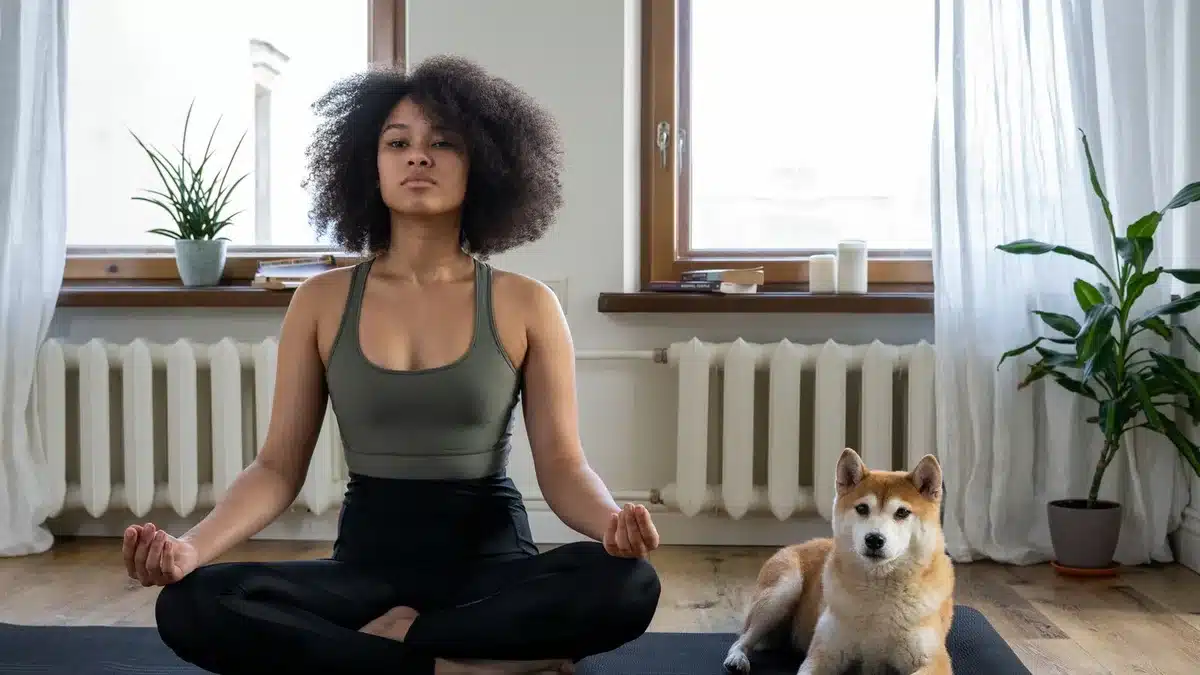
Puppy yoga combines beginner-friendly stretching and yoga with time around puppies. The puppies do not perform yoga poses: they explore, play, approach participants or sleep. Programs differ in their goals, from commercial recreation to shelter fundraising and adoption awareness. A cute video alone cannot tell you whether the animals are comfortable.
Quick Answer: Is Puppy Yoga Safe?
Puppy yoga is not automatically safe or beneficial for puppies. Their age, health, vaccination status, temperament, handling, and opportunities for uninterrupted rest all matter. A responsible program provides dedicated puppy supervisors, clean floors, water, protected resting spaces, and the freedom to withdraw. No puppy should be used as a prop or forced into a pose.

What Happens During a Puppy Yoga Class?
Many classes run about an hour. An instructor leads gentle movement while puppies investigate the room; some programs set aside a separate period for cuddles and photographs. Arrive early to learn the rules. Keep bags, jewelry, medication and small objects out of reach, and avoid lifting puppies unless a trained handler explicitly permits it. Always let a puppy approach first.
Where Puppy Yoga Came From
Puppy yoga is a young trend, and it borrowed its playbook from barnyard animals. Most accounts trace it to goat yoga, which began in the United States in 2016 when Oregon farmer Lainey Morse started hosting yoga sessions with her goats, and the idea of pairing a mat class with animals spread quickly on social media. (PetsRadar)
Puppies soon followed. By 2023 and 2024, franchise-style studios were running classes across Europe. One Amsterdam operator, Puppies & Yoga, also listed locations in Milan, Hamburg, Rome and Paris when Dutch inspectors visited in March 2024. (Hart van Nederland) Switzerland’s federal veterinary office reported that cantonal veterinary services had been fielding questions about puppy yoga since autumn 2023. (BLV fact sheet, April 2024)
That speed matters. Goats used in goat yoga are typically farm animals living on-site. Puppies are in a narrow developmental window, often still with or recently separated from their litter, and frequently transported to the venue. The format moved faster than any welfare standard designed for it, which is a large part of why regulators started paying attention.
Puppy Yoga Club in Boca Raton
Puppy Yoga Club in Boca Raton advertises a 60-minute session, with roughly 30 minutes of accessible yoga followed by 30 minutes of puppy interaction. It says mats are provided and that its puppies come from breeder and rescue partners. Visitors cannot bring their own dogs. The listing has displayed a $59 ticket price, subject to change. The company describes rescheduling policies and announces expected breeds shortly before events. Check current prices, address, policies and availability directly. Importantly, the session format does not independently verify veterinary or welfare standards.
Puppy Yoga at the Humane Society of Broward County
The Humane Society of Broward County puppy yoga event illustrates an adoption-oriented approach. An advertised October 2026 event involved a one-hour session with adoptable puppies, a capacity of 30 people and a $30 ticket. Its broader wellness programming includes gentle movement and mindfulness with shelter animals. Event prices, dates, and age rules vary. Visitors interested in adopting should discuss health, temperament, training, expected adult size and long-term care with shelter staff rather than deciding based on one encounter.
Where Puppy Yoga Is Banned or Restricted
Italy is the clearest example of a national ban, and several other European governments have restricted or moved against puppy yoga since 2023. In the United States, BarkUpToday found no federal or Florida law written specifically for puppy yoga as of November 2026, so oversight depends on general animal welfare, business licensing and pet-sale rules that vary by state and county.
| Date | Where | What happened |
|---|---|---|
| October 2026 | Luxembourg | Agriculture Minister Martine Hansen said puppy yoga in its current form could not receive veterinary authorization. One operator moved its classes across the border to Metz, France. Reporting also noted that new EU dog and cat breeding rules taking effect in 2028 will let member states block activities like puppy yoga. (Luxtoday) |
| May 31, 2024 | Netherlands | Agriculture Minister Piet Adema called for a full ban covering puppies and other young animals and began drafting a proposal for the next cabinet. Later reporting describes the ban as still under consideration. (NL Times) |
| April 30, 2024 | Italy | The Ministry of Health declared puppy yoga illegal and asked regional authorities to monitor for it, following complaints from animal welfare groups and a television investigation. (Sky TG24; CNN via ABC17) |
| April 2024 | United Kingdom | A parliamentary Environment, Food and Rural Affairs Committee report on pet welfare raised concerns about puppy yoga. (MRCVS) |
| April 2024 | Switzerland | The federal veterinary office classified puppy yoga as advertising with animals, which requires an application to the cantonal veterinary service. (BLV) |
| March 2024 | Netherlands | The national food and product safety authority (NVWA) made an unannounced inspection of an Amsterdam puppy yoga studio and later issued administrative fines. (Hart van Nederland; NL Times) |
| July 2023 | England | An undercover ITV News investigation reported puppies as young as six weeks old in classes, some without access to water or rest. The RSPCA urged the public to avoid puppy yoga; the Kennel Club also raised concerns. (ITV News; Vet Nurse Online) |
The objections from regulators and welfare charities repeat across countries: puppies too young to leave their litter, too little sleep and water, infection risk, and concern that classes double as a sales channel for commercially bred puppies. Those same concerns are worth applying to any class you consider in Florida or elsewhere, whether or not local law requires it.
Why People Enjoy Puppy Yoga
Puppy yoga combines light exercise, social connection and the pleasure of watching young dogs explore. Some participants find the atmosphere relaxing or less intimidating than a conventional yoga class. However, research specifically establishing therapeutic benefits from puppy yoga is limited; it should not be marketed as treatment for anxiety, depression or other conditions.
What the Research Says About Human Benefits
The feel-good effect of puppy yoga is real for many people, but the science behind it is narrower than marketing suggests. BarkUpToday found no peer-reviewed study that measures outcomes from puppy yoga classes themselves. The closest evidence comes from research on brief animal visits.
The most cited example is a 2019 randomized controlled trial from Washington State University, published in AERA Open. Researchers assigned 249 undergraduates to one of four groups: 10 minutes of hands-on time petting shelter cats and dogs, watching others pet the animals, viewing a slideshow of the same animals, or waiting quietly. Students in the hands-on group had lower salivary cortisol, a stress hormone, than students in each of the other three groups. (Pendry & Vandagriff, 2019; WSU news release)
Three details keep that finding in perspective:
- It measured momentary relief. The authors describe the effect as short-term stress relief after a 10-minute session, not a lasting treatment effect.
- It did not involve yoga or young puppies. Participants interacted in small groups with shelter animals, a different setting from a crowded studio built around a litter.
- It says nothing about the animals’ experience. A human benefit does not establish that the same setup is good for the puppy.
The honest takeaway: spending a few calm minutes with a friendly animal can lower stress in the moment. You do not need a litter of eight-week-old puppies to get that effect, and an adult dog that enjoys people is far better equipped to handle the attention.
Is Puppy Yoga Good for Puppies?
Young puppies benefit from positive, carefully controlled introductions to people, sounds and environments. That is not the same as repeated handling by strangers.
A puppy that voluntarily approaches a quiet person may have a pleasant experience;

one that hides, freezes or repeatedly tries to leave is signaling a need for space. Individual temperament matters more than the number of people encountered.
Socialization and Age Requirements
The American Veterinary Society of Animal Behavior emphasizes that the first three months are an important socialization period. Carefully managed puppy classes may begin before the vaccination series is complete with veterinary precautions, but that recommendation is not blanket approval for commercial puppy yoga. There is no universal puppy-yoga minimum age. Ask the organizer for ages, vaccination protocols and veterinary oversight, and avoid programs that separate puppies prematurely from their mothers or littermates.

Sleep and Rest Are Essential
Puppies sleep frequently as their bodies and nervous systems develop. A crowded studio can disrupt naps, especially if participants wake puppies for pictures. Resting spaces should be physically separated from visitors, with comfortable bedding and unrestricted access to water. Some overtired puppies become mouthy or hyperactive rather than visibly sleepy. Never wake a sleeping puppy for a cuddle.

How to Recognize Stress in a Puppy
Possible stress signals include turning away, lip licking, yawning outside normal tiredness, a tucked tail, ears pinned back, trembling, crouching, hiding, freezing, panting unrelated to heat, or attempting to escape. One behavior in isolation is not diagnostic; look at the setting and the puppy’s overall body language. If discomfort appears, stop interaction and let the puppy retreat. A quiet or motionless puppy is not necessarily a relaxed puppy.
Vaccinations, Parvovirus and Hygiene
Young puppies can be vulnerable to infectious diseases such as canine parvovirus. Contamination can be carried on floors, footwear, objects and equipment. Ask about veterinary health screening, age-appropriate vaccines, parasite prevention, disinfection and whether puppies from unrelated sources are mixed. Puppies showing signs of illness should not attend. Clean mats with products safe for use around pets and prevent puppies from chewing foam.
Hygiene Risks for People
Infection risk runs both ways. Puppies can catch diseases from crowded rooms, and people can catch germs from puppies, including ones that look perfectly healthy.
The best-documented U.S. example involves Campylobacter, a bacterium that causes diarrhea, fever and stomach cramps. From January 2016 through February 2018, the CDC linked 118 human infections in 18 states to contact with pet store puppies. At least 26 people were hospitalized, and 29 of the patients were pet store employees. The outbreak strain resisted commonly used first-line antibiotics, and investigators found that 95% of sampled puppies had received one or more courses of antibiotics. (CDC outbreak notice; CBS News) A second multistate outbreak in 2019 sickened 30 people in 13 states, Florida among them. (ABC30)
Those outbreaks involved pet stores, not yoga studios. The underlying risk is the same, though: many people handling many young puppies, sometimes from multiple sources. The CDC notes that puppies can carry Campylobacter while appearing healthy and clean. (Fox News summary of CDC guidance)
Simple habits lower the risk:
- Wash hands with soap and water after class, before eating, and after touching a puppy’s bedding, food or messes. Hand sanitizer is a backup, not a replacement.
- Keep puppies away from your face and mouth, however tempting the kisses are.
- Supervise children closely and make sure they wash their hands too.
- Wipe down or wash your own mat after class if you brought one.
- If you have a weakened immune system, talk with your doctor before attending. Campylobacter infections can be more serious in people who are immunocompromised. (HealthDay)
- Treat scratches and nips like any minor wound: wash them well, and seek medical advice if one becomes red, swollen or painful.
Allergies are the other practical consideration. Classes put you on the floor among shedding animals for an hour, so anyone with dog allergies or asthma should plan accordingly.
Preventing Accidental Injuries
Puppies move unpredictably and may dart beneath feet or mats. Participants should move slowly, watch where they step and avoid poses that could put weight on a puppy. Never lift a puppy into a yoga posture. Keep electrical cords, bags and choking hazards inaccessible. Dedicated animal handlers should supervise puppies while the yoga instructor focuses on the class.
Questions to Ask Before Booking
Ask where the puppies live between events, how often they are transported, whether they attend multiple classes per day, who supervises them, and what happens when a puppy wants to leave. Confirm that naps are uninterrupted and that the organizer has veterinary-approved health and cleaning protocols. A rescue affiliation or polished website is not a substitute for clear welfare policies.
Green Flags vs Red Flags
A responsible organizer answers welfare questions before you ask them. Use this table when reading a booking page or arriving at a class; a single red flag is reason enough to choose another event.
| What to check | Green flag | Red flag |
|---|---|---|
| Puppy age | Ages stated up front, with no puppies separated from their litter too early | Ages not disclosed, or puppies look very small and unsteady |
| Puppy source | Named shelter or rescue partner, or a breeder who keeps the litter with its mother | Vague “partner breeders,” or different puppies from unrelated sources at every class |
| Health protocols | Veterinary check before events, age-appropriate vaccines and deworming, sick puppies excluded | No answer about vaccines, or visible diarrhea, coughing or discharge |
| Supervision | Dedicated animal handlers separate from the yoga instructor | The instructor alone manages both the class and the puppies |
| Rest and water | Fenced quiet area with bedding and constant water access | No retreat space; sleeping puppies are picked up or moved |
| Workload | Few sessions per day, long breaks between them, small groups | Back-to-back classes all day with the same puppies |
| Handling rules | Puppies approach on their own; lifting only with handler permission | Puppies passed around for photos or placed on people mid-pose |
| Sales | Adoption by application, with screening and follow-up | Puppies sold on the spot, or a “take one home today” pitch |
| Your questions | Staff answer welfare questions readily | Questions are deflected, or the answer is “the puppies love it” |
Puppy Yoga Versus Structured Puppy Training
A recreational yoga class is primarily designed for people. A qualified reward-based puppy socialization class teaches owners how to read body language, manage gradual exposure, reward confidence and build useful skills. For puppy development, structured socialization is the more relevant choice. See our guide to socializing a dog safely.
How Puppy Yoga Compares With Alternatives
If the goal is a relaxing hour around dogs, several options deliver it with less pressure on young animals. If the goal is raising your own puppy well, a reward-based socialization class is the strongest choice.
| Option | Designed mainly for | What the dog gets | What you get | Welfare risk to the dog |
|---|---|---|---|---|
| Puppy yoga class | People | Varies widely; can be overwhelming | Light exercise, novelty, time with puppies | Moderate to high, depending on age, workload and handling |
| Reward-based puppy socialization class | Your puppy and you | Gradual, controlled exposure and early skills | Training know-how and body-language skills | Low with a qualified trainer and health precautions |
| Yoga at home with your own dog | You, with your dog nearby | Choice to join or rest in a familiar place | Calm routine, shared time | Very low |
| Shelter or rescue volunteering | Shelter animals and the organization | Enrichment, walks, human contact | Purpose, regular time with dogs | Low when guided by shelter staff |
| Therapy dog visit events | People | Visits suited to adult dogs screened for the work | Short, calm interactions with trained teams | Low with screened adult dogs and limited session length |
One pattern stands out: the lower-risk options either center the dog’s development or use adult dogs that have been assessed for public interaction. Puppy yoga does neither by default, which is why the organizer’s policies carry so much weight.
What to Bring and Choosing a Yoga Mat
Wear comfortable clothes and check whether the studio supplies mats. Puppy Yoga Club says it provides mats, while some shelter events ask visitors to bring their own. Two options for a personal mat are the BalanceFrom All-Purpose Exercise Yoga Mat and the Amazon Basics Extra Thick Exercise Yoga Mat. Both are designed for human floor exercise, not puppy chewing. Confirm class rules, inspect the mat for damage and keep puppies from ingesting foam.
Puppy Yoga Etiquette Checklist
Your behavior during class shapes what the puppies experience. Screenshot this list or save it for the day of the event.
Before class
- Skip the class if you or anyone in your household has been around a sick dog recently, or if your shoes have been through dog parks, kennels or shelters that day.
- Leave strong perfume, dangling jewelry, hair ties and loose snacks at home or in a closed bag.
- Arrive early enough to hear the handler’s rules.
During class
- Sit or lie still and let puppies come to you. Silence and an open hand are more inviting than calling or reaching.
- Pet the chest or side of the neck rather than patting the top of the head.
- Watch for turning away, lip licking, yawning or freezing, and stop touching the puppy when you see them.
- Never pick up, carry or position a puppy unless a handler says it is safe.
- Leave sleeping puppies alone, even for a photo.
- Keep photos flash-free and quick; do not hold a puppy still for the camera.
- Tell a handler if you see a puppy chewing something it should not, limping or having an accident.
After class
- Wash your hands before eating, touching your face or handling your own pets.
- Clean your mat and consider changing clothes before greeting a young or unvaccinated puppy at home.
- If you are thinking about adopting, start an application and conversation rather than deciding on the spot.
Safer Alternatives to Puppy Yoga
If you have a puppy, try calm yoga at home while the dog chooses whether to stay nearby. Provide a bed, water and a suitable toy. Other options include reward-based puppy classes, supervised interactions with compatible healthy dogs and volunteering with a rescue. The best experience is one in which puppies control the pace of interaction.
What to Do if You See a Problem
Most welfare problems at puppy events are fixable in the moment if someone speaks up calmly. Start with the people running the class and escalate only if the issue is serious or ignored.
- Tell a handler right away. Point out the specific puppy and what you saw: no water, a puppy that cannot get away from people, rough handling, or signs of illness such as vomiting or diarrhea.
- Stop participating if nothing changes. Leaving a class is a clear signal to organizers, and you are not obligated to stay.
- Write down the details. Note the date, time, location, organizer name and what you observed while it is fresh.
- Contact the venue and the organizer in writing. Many events rent studio space, and venue owners often care about complaints.
- Report serious concerns to the authorities. In the United States, that usually means your county’s animal services or animal control agency. In the UK, the RSPCA advises contacting the local council, because many profit-making animal activities require local authority licensing. (ITV News)
- Leave an honest review. Describe what you saw factually. Future customers read reviews, and specific, calm accounts carry more weight than angry ones.
If a puppy appears to be in immediate danger or acute distress, call local animal control or law enforcement rather than waiting.
Frequently Asked Questions About Puppy Yoga
How Much Does Puppy Yoga Cost?
Prices vary by provider, city and event. The Boca Raton commercial listing has advertised $59; an October 2026 Humane Society of Broward County event advertised $30. Check current booking pages rather than assuming past prices remain valid.
Can I Bring My Own Puppy?
Often not. Puppy Yoga Club states that outside dogs are not allowed. Where a program does accept visitors’ puppies, ask about vaccinations, temperament screening and how interactions with unfamiliar dogs are managed.
Can Puppies Attend Before Their Vaccinations Are Complete?
There is no one-size-fits-all answer. Appropriate early socialization can be important, but group exposure must be weighed against local infectious disease risks. Ask your veterinarian and confirm the organizer’s health protocols.
Do Puppies Enjoy Being Held by Strangers?
Some may enjoy gentle contact, but others find it stressful. A puppy should choose whether to approach. Avoid passing puppies between people, restraining them for photographs or waking them for cuddles.
Can Puppy Yoga Help a Shy Puppy?
A crowded event can overwhelm a fearful puppy. Shy puppies generally benefit from gradual, positive introductions tailored to their comfort level, ideally with advice from a qualified reward-based trainer.
Can Children Attend?
Rules vary. Some programs have minimum ages and require adult supervision. Children should never chase, squeeze, lift without permission or disturb sleeping puppies. Staff should actively manage all interactions.
Is Puppy Yoga the Same as Animal-Assisted Therapy?
No. A recreational class should not be confused with a clinically structured animal-assisted intervention with defined goals and qualified professionals. Feeling relaxed after class does not establish a medical treatment benefit.
Are Shelter Puppies Available for Adoption?
Some shelter-run events feature adoptable puppies, but availability varies. Ask staff about adoption applications, health records and whether the puppy suits your household. Never adopt impulsively based on a brief class interaction.
What if a Puppy Falls Asleep?
Leave it alone. Sleeping puppies need uninterrupted rest. Responsible organizers provide a protected area where participants cannot wake or handle resting animals.
How Can I Tell Whether a Class Is Ethical?
Look for clear answers about puppy sources, ages, veterinary precautions, handling, dedicated supervision, transport and rest. Avoid programs that require puppies to remain available for constant contact or treat them as exercise props.
Is Puppy Yoga Cruel?
It can be, depending on how it is run. Investigations in England found puppies as young as six weeks old without water or rest, and the RSPCA and other UK charities urged the public to avoid classes. A program with dedicated handlers, protected rest areas, health checks and limited sessions reduces the risks, but it cannot remove them entirely.
Why Was Puppy Yoga Banned in Italy?
Italy’s Ministry of Health declared puppy yoga illegal in April 2024 after complaints from animal welfare groups and a televised investigation alleging puppies were mistreated and kept in pens between sessions. Regional authorities were asked to watch for classes.
Where Did Puppy Yoga Come From?
Puppy yoga grew out of goat yoga, which began on an American farm in 2016. The puppy version spread through studios in Europe and the United States in the early 2020s, largely through social media.
Can You Get Sick From Puppy Yoga?
It is possible. Puppies can carry germs such as Campylobacter while looking healthy, and the CDC has linked multistate outbreaks to contact with pet store puppies. Washing your hands, keeping puppies away from your face and supervising children lowers the risk.
Is Puppy Yoga the Same as Doga?
No. Doga is yoga practiced with your own dog, often at home or in a class for owners and their pets. Puppy yoga brings strangers together with puppies supplied by the organizer, which raises different welfare and health questions.
How Old Are the Puppies Used in Puppy Yoga?
It varies by organizer, and many do not publish ages. Ask before booking. Avoid programs that cannot answer or that use puppies separated from their mother and littermates too early.
Does Petting Puppies Really Reduce Stress?
Short, hands-on time with animals can lower stress in the moment. A 2019 Washington State University trial found that 10 minutes of petting shelter cats and dogs reduced students’ cortisol levels. That study did not test puppy yoga, and its results do not show lasting effects.
Is Puppy Yoga Legal in Florida?
As of November 2026, BarkUpToday found no Florida law written specifically about puppy yoga. Organizers remain subject to general animal welfare laws and any local licensing rules, so check with your county if you have concerns.
Final Thoughts on Puppy Yoga
Puppy yoga may be fun for people, but the puppies’ welfare must come first. Choose organizers that welcome questions, prioritize health and sleep, and allow every puppy to withdraw. For owners seeking socialization, a carefully managed reward-based puppy class is usually more appropriate than a recreational yoga event.
Veterinary and Animal Welfare References
AVSAB Puppy Socialization Position Statement; UC Davis Puppy Socialization; SPCA New Zealand Puppy and Kitten Yoga; Pendry & Vandagriff (2019), AERA Open; CDC: Campylobacter Outbreak Linked to Pet Store Puppies; Swiss BLV Puppy Yoga Fact Sheet (German); ITV News: RSPCA on Puppy Yoga; MRCVS: Netherlands Considering Ban; Luxtoday: Luxembourg Tightens Rules. © BarkUpToday™ 2026.
Photos: cottonbro studio, Julissa Pires, Hanifi Sarıkaya and Clarissa Roley via Pexels.