

Herding Dog Group
History, Temperament, Care, Working Ability & Veterinary Insights
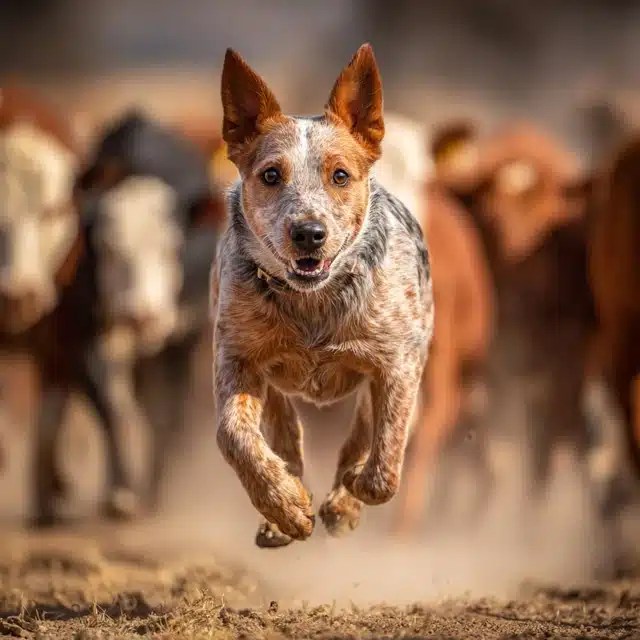
Discover why the Australian Cattle Dog remains one of the world’s top herding breeds — from rugged Australian droving origins and Blue/Red Heeler legacy to temperament, health, grooming, and care tips for owners worldwide (US / UK / Canada / AUS).
Blue Heeler | Red Heeler Cattle Dog
Herding Dog Group
“The general appearance is that of a strong compact, symmetrically built
working dog, with the ability and willingness to carry out his allotted task however arduous. Its combination of substance, power, balance and hard muscular condition must convey the
impression of great agility, strength and endurance. Any tendency to grossness or weediness is a serious fault.” AKC
The Australian Cattle Dog (ACD)—often called the Blue Heeler or Red Heeler—is one of the world’s toughest and most intelligent herding breeds. Developed in the rugged Australian Outback, this compact, robust dog was bred for long days droving cattle across harsh, dry landscapes.
Known globally today for its stamina, loyalty, and keen work ethic, the ACD has become a favorite among ranchers, farmers, sport-dog enthusiasts, and active families throughout the United States, Canada, the UK, Europe, and Australia.
This updated 2025 breed profile covers everything from the dog’s origins and coat genetics to AKC and UKC standards, veterinary risks, temperament traits, training needs, and real-world suitability for modern homes.
Breed History: Australian Working Heritage
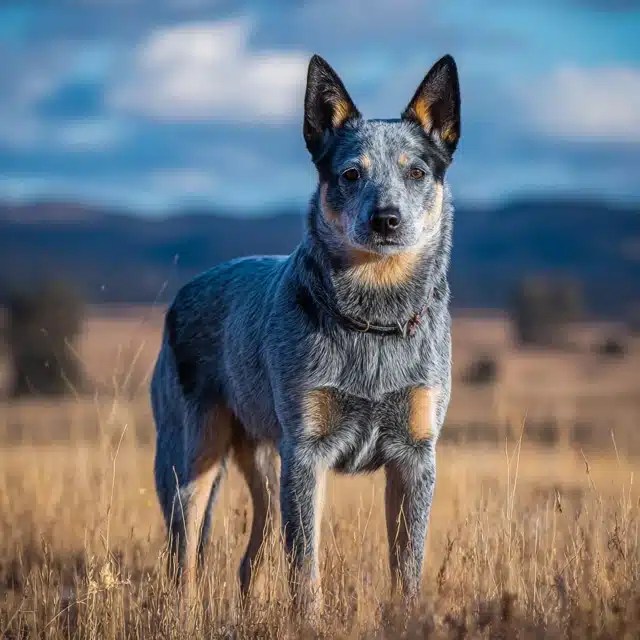
The Australian Cattle Dog’s development began in the early 1800s when British settlers attempted to herd cattle across Australia’s vast and unforgiving terrain. Traditional herding breeds struggled with heat, distance, and unruly cattle.
To solve this, ranchers bred:
- Early British Collies (for intelligence and herding structure)
- Dingoes (for heat tolerance and endurance)
- Bull Terriers (for tenacity and courage)
- Dalmatian & Black-and-Tan Kelpies (for companionship and stability)
This mixture produced a tireless, intelligent, weather-resistant drover capable of traveling 20+ miles a day while maintaining complete control over difficult livestock.
AKC Breed Description
Herding Dog Group
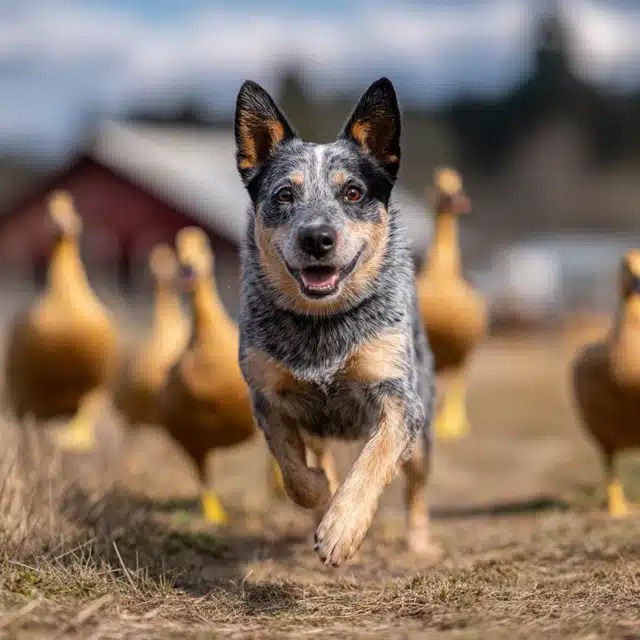
The American Kennel Club places the Australian Cattle Dog in the Herding Group. The Australian Cattle Dog was purpose-bred in 19th-century Australia to solve a serious problem: early British herding dogs could not cope with the vast distances, harsh climate, and tough, semi-wild cattle of the Australian interior. Settlers needed a dog that could work quietly, bite low, travel far, and keep going all day without breaking down in the heat.
To create this new type of cattle dog, Australian stockmen crossed imported collie-type herding dogs with the native Dingo, selectively breeding offspring that showed both strong herding instinct and natural resilience in the Outback.
Over time, additional blood from breeds such as the Dalmatian (for loyalty to horses and natural guarding instinct) and Bull Terrier (for courage and grip) refined the dog’s temperament and toughness. Blue-mottled working dogs that emerged from these programs became the ancestors of the modern Australian Cattle Dog.
By the late 1800s, a recognizably consistent type existed: a compact, muscular, weather-resistant heeler with a speckled or mottled coat, naturally wary of strangers but intensely loyal to its handler. These dogs became known by several regional names—Blue Heeler, Red Heeler, Queensland Heeler—before the standardized name Australian Cattle Dog was adopted.
As the breed’s reputation spread beyond Australia, its intelligence, work ethic, and athleticism attracted ranchers and performance-dog enthusiasts worldwide. The American Kennel Club eventually recognized the Australian Cattle Dog in 1980, bringing this rugged Outback worker into the U.S. Herding Group and onto farms, ranches, and sport fields throughout North America.
Key AKC standards include:
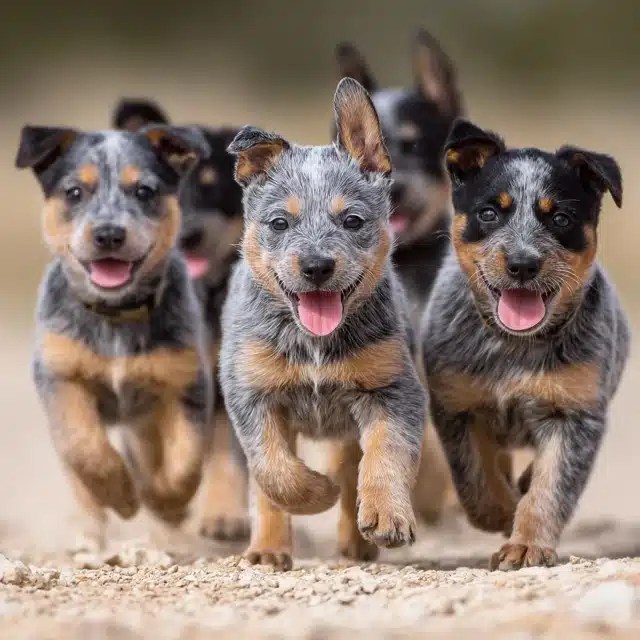
General Appearance
- Compact, muscular, balanced dog with a powerful outline
- Capable of quick, controlled movement and sudden bursts of speed
Head & Expression
- Broad skull, strong muzzle, slight stop
- Ears are pricked, set wide, alert
- Eyes dark brown, intelligent, and keen
Coat & Color
- Smooth double coat
- Patterns: Blue mottled, Blue speckled, Red speckled
- Tan points may appear on legs, cheeks, and eyebrows
Movement
- Free, smooth, efficient gait
- Must demonstrate agility and endurance
Temperament
- Extremely loyal, alert, devoted to family
- Reserved with strangers; excellent watchdog
- High intelligence and working drive
UKC Breed Description
Herding Dog Group
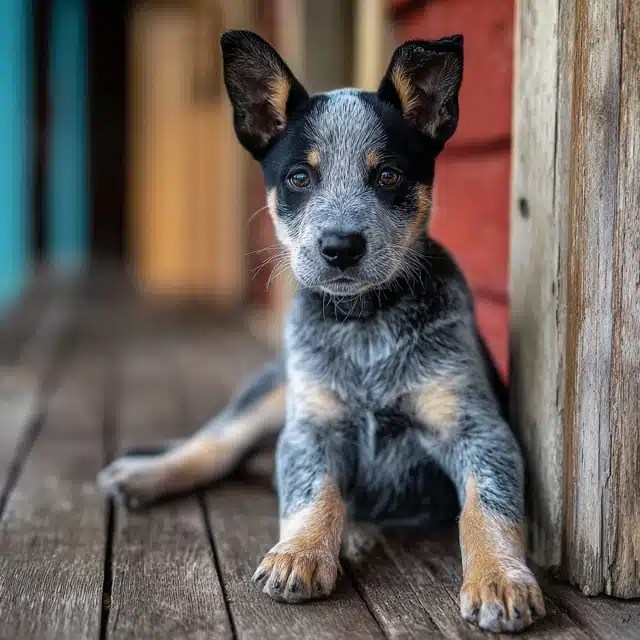
” A medium-sized, blue or red speckled dog that is strong, compact, and symmetrically built. The breed conveys the impression of great agility and the capacity for endurance, and any tendency to being either overdone or weedy should be seriously faulted.” UKC
The Australian Cattle Dog originated in Australia through carefully planned crossbreeding intended to produce a tough, heat-resistant, and highly versatile herding dog capable of driving cattle across vast distances of the Outback. Early Australian stockmen experimented with multiple working breeds before achieving the stable, reliable dog we know today.
The foundation stock included:
- Dingoes contribute stamina, heat tolerance, and environmental adaptability
- Bull Terriers, adding tenacity and grip strength
- Dalmatian, influencing the trademark loyalty to horses, and the unusual trait of puppies being born white
- Blue Merle Collies (often referred to as “Hall’s Heelers”), enhancing their herding instinct and biddability
- Kelpie provides agility, endurance, and refined herding behavior
These crosses produced a compact, powerful, and silent worker known for moving cattle by nipping at their heels—an instinct that earned the breed its common names: Australian Queensland Heeler, Blue Heeler, and Red Heeler, depending on coat coloration.
By 1893, the breed’s type had stabilized, and true-to-standard Australian Cattle Dogs began breeding consistently. Their ability to withstand extreme heat, travel long distances, and work independently made them indispensable across cattle stations.
The United Kennel Club officially recognized the Australian Cattle Dog in 1985, acknowledging its long-standing importance as one of the most resilient and efficient herding dogs ever developed.
The UKC standard is unique because it explicitly penalizes features that hurt the dog’s health. For example, demanding a ‘level topline’ and ‘muscular loins’ isn’t just for looks—it prevents the spinal injuries common in high-impact herding dogs.
Training Progression Chart: 8 Weeks → 2 Years
You can present this as a table or as subheadings. Here it is in blog-ready chart form:
Australian Cattle Dog Training Progression (8 Weeks to 2 Years)
The Australian Cattle Dog is not trained once and done—its mind and body need structured development from 8 weeks right into adulthood.
| Age Range | Main Focus | Key Goals | Common Mistakes to Avoid |
|---|---|---|---|
| 8–12 weeks (Puppy arrival) | Bonding, socialization, basic manners | • Name recognition, coming when called in the house • Handling exercises (touch paws, ears, mouth) • Exposure to different people, dogs, surfaces, sounds • Soft introduction to crate and short alone-time | • Overwhelming the puppy with intense exercise • Letting herding/nipping at kids start as “cute” • No structure or boundaries in the home |
| 3–6 months (Baby working dog) | Foundation obedience + impulse control | • Solid sit, down, stay, recall on leash • Start loose-leash walking • Short, fun “jobs” (carrying toys, simple fetch) • Begin shaping calm behavior around livestock (from a distance) | • Too much repetitive high-impact exercise (jumps, long runs) • Allowing pup to chase vehicles / bikes • Using harsh corrections on a very smart, sensitive dog |
| 6–12 months (Teenage phase) | Channeling drive, structured work | • Reliable recall in low–medium distraction areas • Formal heel work, focus around other dogs and animals • Begin organized activities: herding instinct tests, basic agility, obedience, scent games • Teach an “off switch” (settle on mat, calm in the house) | • Leaving them under-exercised: leads to destruction and obsessive behavior • Letting them rehearse bad habits (heel-nipping, chasing kids) • Inconsistent rules between family members |
| 12–18 months (Young adult worker) | Advanced obedience + real jobs | • Off-leash control in safe areas • Stock work under supervision (if available) • Longer hikes, bike-joring, canicross, or advanced agility • Strong impulse control around wildlife and moving objects | • Treating them like a “normal pet” with no job • Not addressing reactivity early (barking at strangers, guarding) • Overloading joints with intense sport work every day without rest |
| 18–24+ months (Full working maturity) | Refinement, consistency, mental conditioning | • Too much repetitive high-impact exercise (jumps, long runs) • Allowing pup to chase vehicles/bikes • Using harsh corrections on a very smart, sensitive dog | • Reliable behavior in all everyday situations: guests, vet, farm, travel • Clear working role: herding, sport, running partner, scentwork, etc. • Regular conditioning: strength, flexibility, cardio • Lifelong learning: new tasks, tricks, routines |
Health Overview
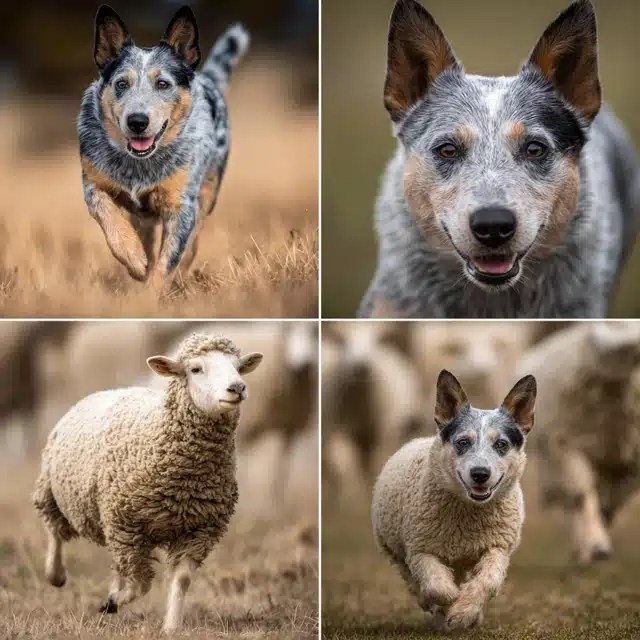
1. Congenital Deafness (BAER-test recommended)
- Especially common in mottled or heavily white-marked puppies
- Unilateral deafness is more common than bilateral deafness
2. Progressive Retinal Atrophy (PRA-prcd)
- Early DNA testing is essential
- Leads to gradual night blindness → complete blindness
3. Hip & Elbow Dysplasia
- Moderate risk
- Working dogs benefit from joint supplementation and radiographic screening
4. Cruciate Ligament Damage (CCL/ACL)
- Caused by sudden directional changes and overexertion
- Prevented via conditioning & maintaining lean body weight
5. Heat Stress
- ACDs tolerate heat well but not dehydration
- Ranch dogs require cooling breaks, shade, and electrolytes
6. Behavioral Health
- Under-stimulated ACDs may develop obsessive behaviors:
- Tail-chasing
- Excessive barking
- Compulsive herding of children/pets
Working fulfillment significantly reduces behavior issues.
GRAPH 1 – Temperament Radar Chart Values
Traits scored 1–10
| Trait | Score |
|---|---|
| Trainability | 9 |
| Energy Level | 10 |
| Herding Instinct | 10 |
| Prey Drive | 8 |
| Independence | 6 |
| Affection Toward Family | 7 |
| Stranger Wariness | 7 |
| Barking Level | 4 |
Temperament distribution of the Australian Cattle Dog showing extreme herding instinct and high energy — ideal for experienced owners.
Genetics & Closest Related Breeds
Closest Working & Genetic Relatives
While exact percentages vary by study, the Australian Cattle Dog clearly sits in the Australian herding/working cluster. Functionally and historically, its closest breeds are:
- Australian Stumpy Tail Cattle Dog
- Essentially, the “tailless cousin” of the ACD.
- Bred from similar early cattle dog stock but selected for a naturally bobbed tail and more upright outline.
- Shares many behavioral traits: high drive, toughness, strong heel-nipping style.
- Australian Kelpie
- Lighter, more upright, often more “eye” and outrun than the ACD.
- Breeds share working collie ancestry and have similar endurance and heat tolerance.
- Kelpies usually work more on the head and sides, while ACDs are classic heelers.
- Koolie (German Coolie / Australian Koolie)
- Versatile herding dog used on many of the same stations and properties as ACDs.
- Often used as a more flexible, medium-driven all-round herder, while ACD is the “hard” cattle specialist.
- Border Collie (functional cousin, not Australian but closely related in the broader collie/herding group)
- Shares high intelligence and trainability.
- Border Collies are more biddable and refined in eye and outrun, whereas ACDs are more physical, pushy, and heel-oriented.
In terms of genetics and working style, the Australian Cattle Dog sits closest to other Australian herding breeds such as the Stumpy Tail Cattle Dog, Kelpie, and Koolie, with the Border Collie as a high-intelligence functional cousin.
Comparison Table – ACD vs Kelpie vs Stumpy Tail Cattle Dog
Working Breed Comparison
| Feature | Australian Cattle Dog | Australian Kelpie | Australian Stumpy Tail Cattle Dog |
|---|---|---|---|
| Primary Role | Hard cattle driving, heel nipping | Versatile herding (sheep/cattle), outrun & heading | Cattle herding, heeling with more upright style |
| Build | Compact, muscular, dense | Lighter, athletic, agile | Similar to ACD but slightly more upright, shorter tail |
| Tail | Full tail | Full tail | Naturally bobbed/short tail |
| Energy Level | Very high | Very high | Very high |
| Trainability | High (but independent) | High (biddable, responsive) | High (can be more intense, sharp) |
| Herding Style | Heeling, close-contact pressure | More eye and outrun, flanks stock | Farms, ranches, sports homes, and very active rural families |
| Stranger Wariness | Moderate–high | Moderate | Moderate–high |
| Ideal Homes | Powerful heel & body block, firm grip | Farms, active rural & sport homes, agility/obedience enthusiasts | Cattle herding, heeling with a more upright style |
Genetically and functionally, the Australian Cattle Dog sits closest to other Australian herding dogs, particularly the Kelpie and the Australian Stumpy Tail Cattle Dog.
Genetics Section: Coat, Color & Health-Related Genes
Here’s a strong genetics section you can add under a header like:
Genetics & Coat Color: Why Some Heelers Are Born White
1. Coat Type & Double Coat Biology
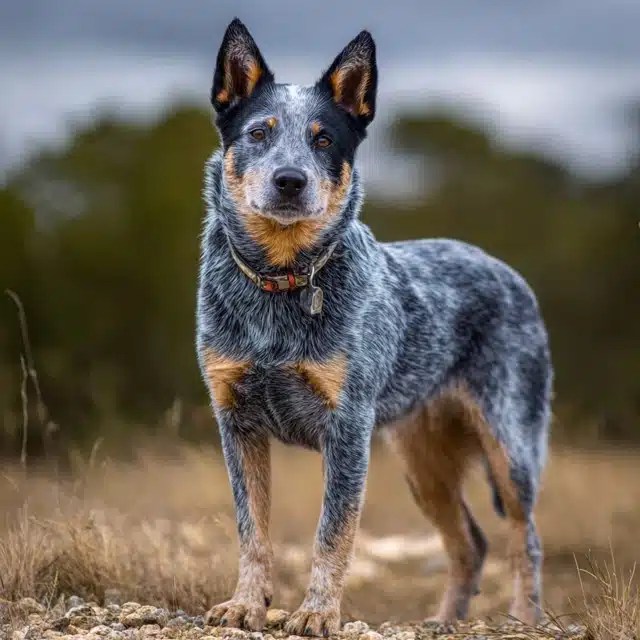
The ACD has a short, dense double coat:
- Outer coat: harsh, weather-resistant, designed to shed water and burrs
- Undercoat: soft, insulating, allows the dog to work in cold, wind, and heat shifts
This combination is inherited from collie-type herding dogs and adapted further by selection in the Australian climate.
2. Color Genetics: Blue & Red, Mottling & Speckling
Australian Cattle Dogs are either:
- Blue (blue mottled or blue speckled, with or without tan points)
- Red speckled
Key points:
- Puppies are often born predominantly white, especially in blue heeler litters, then develop mottling and speckling as the ticking and pigment genes express over the first weeks/months.
- The speckling and mottling patterns are due to white spotting/ticking loci, not merle.
- Tan points (on legs, cheeks, and eyebrows) are controlled by agouti-related loci and selective breeding.
This is where you can swap in a short sentence like:
That famous ‘born white’ Blue Heeler puppy is genetically pre-wired to grow into a mottled or speckled adult as the ticking pattern comes in.
3. Deafness & Pigment-Linked Genetics
Because the ACD carries genes for white spotting and heavy ticking, there is an increased risk of pigment-related deafness:
- Melanocytes (pigment cells) are also involved in inner-ear development.
- A lack of pigment in certain areas can correspond to underdeveloped hearing structures.
- This is why BAER hearing tests are so important in breeding programs.
You can add a friendly explanation:
In simple terms, the same genes that create those beautiful speckles can, in some lines, also increase the risk of congenital deafness.
4. PRA-prcd & Inherited Eye Disease
- Many ACD lines carry the PRA-prcd (Progressive Rod–Cone Degeneration) mutation.
- This is a late-onset retinal degeneration that leads to gradual blindness.
- Responsible breeders test the DNA of breeding dogs and avoid breeding carrier × carrier combinations.
5. Working Dog Physiology
Genetically, ACDs are:
- Slow-to-mature athletes: their joints and connective tissues need time to develop fully.
- High oxidative muscle capacity: ideal for long distances and sustained herding work.
- Very efficient at thermoregulation compared to many European herding breeds—but still vulnerable to heatstroke without water and rest.
The Australian Cattle Dog’s genes are the blueprint for a compact, heat-tolerant, high-endurance working athlete—but they also bring along a few responsibilities: hearing testing, eye screening, careful joint protection, and a lifestyle that lets this dog do what it was bred to do—work, move, think, and partner with people.
Working Drive & Trainability: Australian Cattle Dog vs Kelpie vs Stumpy Tail Cattle Dog

Working drive, trainability, and independence scores (1–10 scale) for the Australian Cattle Dog, Australian Kelpie, and Australian Stumpy Tail Cattle Dog. This comparison helps herding-dog owners in Australia, North America, and Europe understand how each breed balances intensity with handler focus.
Conclusion: Australian Cattle Dog & Its Closest Relatives
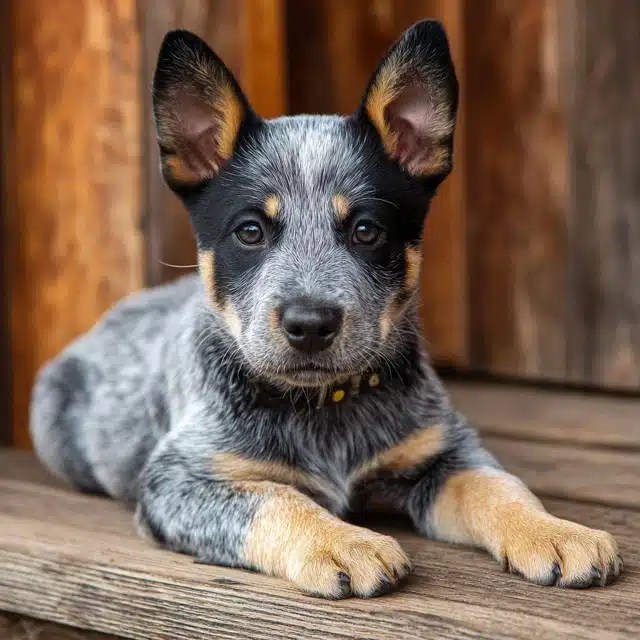
Among Australia’s legendary herding dogs, the Australian Cattle Dog is the hard-contact specialist: compact, muscular, and bred to push tough cattle over long distances. Compared with its closest relatives—the Australian Kelpie, Australian Stumpy Tail Cattle Dog, and Koolie—the ACD stands out for its combination of heel-nipping style, silent working approach, and incredible grit.
The Kelpie tends to be lighter, faster, and more outrun-oriented, excelling at gathering and heading stock over open country. The Stumpy Tail Cattle Dog is even more intense and upright than the ACD, with a naturally bobbed tail and a slightly sharper edge that suits experienced handlers on big cattle properties. The Koolie offers a more flexible, all-round herding style that many mixed farms appreciate, often balancing stamina with a softer, more biddable temperament.
For ranchers and high-drive dog lovers across the U.S., Canada, the UK, Europe, and Australia, the Australian Cattle Dog remains the best choice when the job demands a durable, heat-tolerant, fiercely loyal heeler that can work all day and then sleep by your feet at night. Understanding how it compares to its closest relatives helps owners choose the right partner:
- ACD for hard cattle work and strong, physical herding,
- Kelpie or Koolie for more versatile flock work and sport,
- Stumpy Tail for seasoned handlers needing maximum intensity.
Handled correctly—with structured training, health screening, and a real job to do—the Australian Cattle Dog is not just a breed; it’s a working teammate and a once-in-a-lifetime dog.
1. Why are some Australian Cattle Dog puppies born almost entirely white?
Many Blue Heelers are born with a primarily white coat because the ticking and mottling patterns develop as they grow. The coat-color genetics involved in speckling and mottling express progressively over the first weeks, gradually revealing the blue or red pattern. This is a normal developmental stage and not a defect.
2. Is there a genetic link between coat color and deafness in Australian Cattle Dogs?
Yes. The same pigment-related genes that create heavy white patterning, speckling, or extreme ticking can be associated with congenital deafness. This is why responsible breeders use BAER hearing testing and avoid breeding dogs with confirmed bilateral deafness. Not every speckled dog is deaf, but there is a higher risk in heavily white-patterned lines.
3. What genetic tests are recommended before breeding an Australian Cattle Dog?
Breeding dogs should be screened for:
- PRA-prcd (progressive retinal atrophy)
- Congenital deafness via BAER testing
- Hip and elbow evaluations (OFA or PennHIP)
- Eye exams by a veterinary ophthalmologist
These tests help reduce blindness, deafness, and orthopedic disease in working and companion ACDs.
4. Are Australian Cattle Dogs naturally independent, or is that a training issue?
Independence is partly genetic and breed-typical. ACDs were designed to make decisions and control cattle without constant commands. Good training doesn’t remove this trait—it channels it. Structured obedience, impulse control, and giving the dog a job turn genetic independence into useful working confidence instead of stubbornness.
5. How should training change as an Australian Cattle Dog matures from puppy to adult?
Training should progress from gentle socialization and basic manners (8–12 weeks), to formal obedience and impulse control (3–6 months), to structured work and advanced tasks (6–18 months), and then into ongoing refinement and mental conditioning (18–24 months and beyond). ACDs do best when you treat training as a lifelong process, not a one-time puppy course.
6. Which breeds are genetically or functionally closest to the Australian Cattle Dog?
The closest working and genetic relatives are the Australian Stumpy Tail Cattle Dog, Australian Kelpie, and Koolie, all part of the Australian herding dog cluster. Functionally, Border Collies are a high-intelligence cousin, but ACDs tend to be more physical, more heel-oriented, and more intense in close-contact cattle work.
Text Copyright © 2012–2025 Claudia Bensimoun, BarkUpToday.com. Updated 2025. All rights reserved.
Images created with Midjourney AI — Copyright © 2025. Not permitted for reuse, redistribution, or modification.
Australian Cattle Dog, Blue Heeler, Red Heeler, Queensland Heeler, Australian Cattle Dog breed guide, Australian Cattle Dog temperament, Australian Cattle Dog training, Australian Cattle Dog health, Australian Cattle Dog genetics, Australian Cattle Dog working dog, Australian Cattle Dog herding breed, Australian Cattle Dog USA, Australian Cattle Dog UK, Australian Cattle Dog Canada, Australian Cattle Dog Australia, Blue Heeler puppies, Australian Cattle Dog breeders, Kelpie vs Australian Cattle Dog, Stumpy Tail Cattle Dog vs Australian Cattle Dog, Koolie vs Australian Cattle Dog, high energy herding dogs, best dogs for farms and ranches, cattle herding dogs, Outback cattle dog, Australian herding dog breeds.