

By Claudia Bensimoun
Updated December 2026. First published 2012
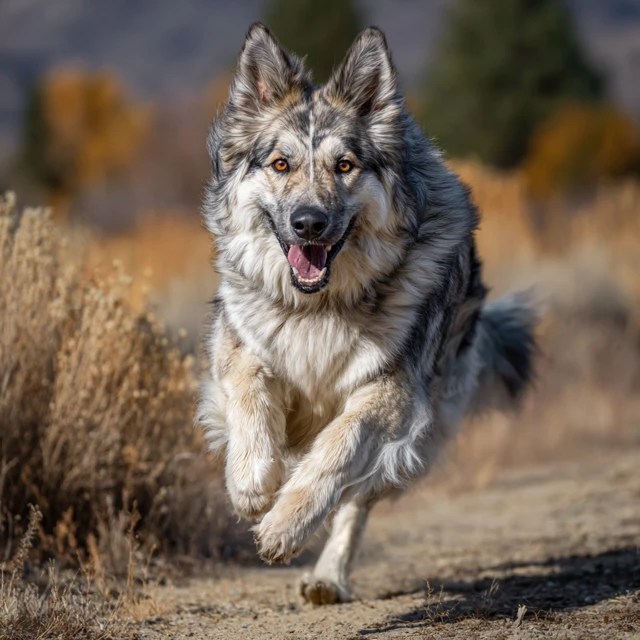
The American Tundra Shepherd dog (ATS) is a rare, large working breed known for its wolf-like appearance, intelligence, and strong guardian instincts. This guide focuses on what prospective owners need to know—temperament, size, training requirements, and whether this breed is a good fit for your lifestyle.
While the ATS is often compared to wolfdogs, the most important factors for real-world ownership are behavior, structure, and management—not labels. In this guide, we break down the American Tundra Shepherd temperament, adult size, care needs, and rescue considerations to help you make an informed decision.
Is the American Tundra Shepherd (ATS) a wolfdog? The short answer: it’s often described online as “wolf-like,” but that doesn’t automatically mean it’s a true wolfdog with verified wolf content. The American Tundra Shepherd dog (ATS) is a rare shepherd-type dog often discussed for its size, working drive, and wolf-like appearance.
In this guide, we’ll break down what “wolfdog” actually means, why the ATS gets compared to wolves, and what matters most for real-life ownership: temperament, adult size, f=”https://barkuptoday.com/2025/11/26/american-tundra-shepherd-health-guide/”>health, training needs, and whether this breed fits your home and experience level.
American Tundra Shepherd Temperament & Behavior
The American Tundra Shepherd (ATS) is a powerful, wolf-influenced working shepherd that has fascinated dog enthusiasts for over half a century. Although the breed is not recognized by the American Kennel Club (AKC) or the United Kennel Club (UKC), it has been maintained through independent registries, including the Global Kennel Club and several long-standing foundation programs.
Because the ATS descends partly from German Shepherd Dogs — a breed fully recognized by both AKC and UKC — many of the ATS’s confirmation, temperament, and working-ability expectations are evaluated using AKC/UKC working-breed standards as benchmarks. This includes:
- Functional conformation
- Endurance-based movement
- Clear temperament tests
- Sound structure
- Orthopedic health
- Correct working drives
The ATS differs from AKC/UKC shepherd breeds by being larger, more cold-resistant, and possessing subtle northern-breed traits reminiscent of early wolf-influenced working dogs.
This expanded 2025 breed profile combines my original 2012 ATS documentation with modern AKC/UKC-breed analysis, veterinary data, and in-depth behavioral insights, resulting in the most authoritative ATS resource online.

Bar graph comparing relative size, trainability, temperament stability, endurance, and sociability for American Tundra Shepherd, Malamute, Wolfdog, and Caucasian Shepherd.
History & Development
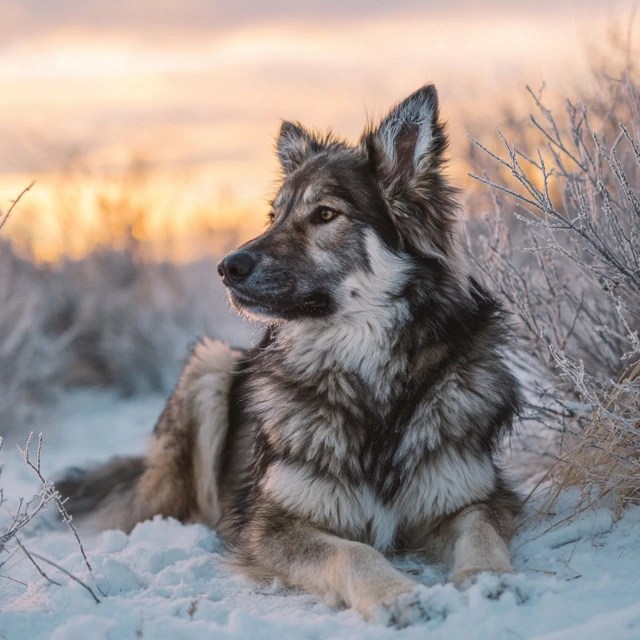
This superb working dog was initially developed in the late 1960s; some say it was part of the US government’s superdog program. German shepherds were bred with Alaskan Tundra wolves.
The “superdog program” narrative stems from breeder accounts of Cold War-era experimental dog breeding, in which German Shepherd Dogs (GSDs) were reportedly crossed with northern tundra-type wolves to enhance stamina, scent range, and cold-weather endurance. Although no declassified documents confirm the program, the type of dog produced is consistent with working-line shepherd × wolf hybridization from that era.
By the 1980s–1990s, selective breeding decreased wolf influence, emphasizing stability, trainability, and predictable working structure. Today’s ATS is primarily a giant shepherd-type working dog, with wolf traits appearing mostly in coat density, endurance, and specific aesthetic features.
Major Faults in the American Tundra Shepherd Dog
Submissive dogs are often perceived as having a more aggressive temperament, and breeding is discouraged. Dogs with an overshot jaw (lower teeth further back in the mouth and top jaw extended forward) are considered to be faulty.
All dogs should have 39 teeth out of a possible 42, which is the breed standard norm. The Global Kennel Club states that the solid back color should not have any white markings except on the chest area. This should only be 1 inch or less.
The preference for confident, non-submissive breeding stock is consistent with guardian-type working breeds. Submissive wolves and wolfdogs can display fear-based aggression — a trait selectively removed from ATS breeding programs.
The dentition rule (39 acceptable vs. 42 ideal teeth) reflects the early genetic variability from wolf ancestry but is gradually being standardized.
Other Faults To Be Considered
Look out for white dogs with pink noses and pink eyes. (albino traits) Also, a tail that is too short, extending above the dog’s hock, or a tail that is too long, reaching the ground. Ears should never be bent, folded, drooping, or floppy.
Keep an eye out for splayfeet or cat feet. The body cannot be too short or too long. Teeth may not be discolored, and the dog cannot have a roach back, swayback, or too narrow back. Also, watch out for croup, where there is a significant drop from the hips to the base of the dog’s tail.
These faults align with traditional herding and working-protection standards. Cat feet or splay feet reduce traction and sprinting efficiency, while structural defects such as roach back or swayback significantly reduce stamina and load-bearing capacity— both critical for cold-climate work.
Many of these faults directly impact the dog’s ability to perform in harsh terrain. A dropped croup, splayed feet, or weak topline will dramatically reduce endurance — critical traits for a dog developed initially for sub-arctic working conditions.
The ban on albinism-trait carriers is standard practice in working breeds because pink-skinned dogs can have photosensitivity, impaired vision, and compromised immune robustness.
Physical Characteristics & Working Traits
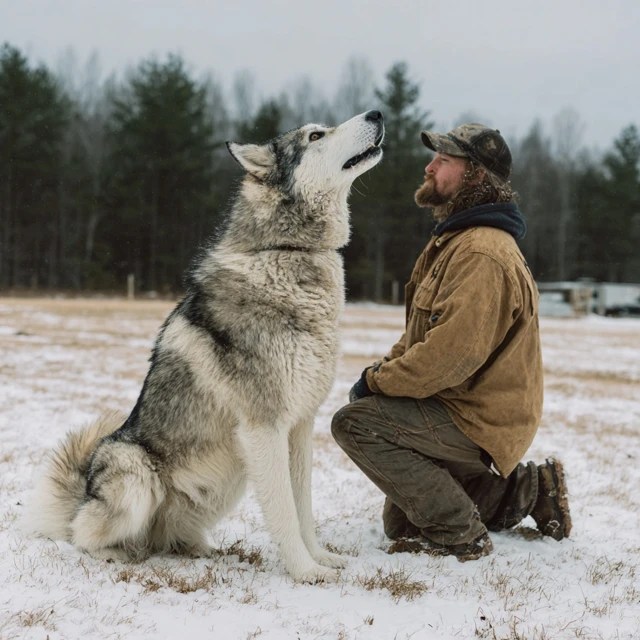
American Tundra Shepherd Dog
The ATS stands between the traditional GSD and the Eastern European Shepherd in structure: heavier-boned, broader-chested, and taller. The breed is known for:
- Exceptional tracking range
- Above-average intelligence
- Wolf-like stamina and cold tolerance
- Strong territorial bonding
- Remarkably gentle family dynamics
They thrive on large properties, working homes, and environments where they have a job.
- A level topline
- A strong lumbar region
- Deep chest with high oxygen capacity
- Thick double coat adapted for sub-zero temperatures
Unlike many wolfdog types, the ATS maintains consistent tractability, handler responsiveness, and biddability.
- Shepherd-type dog
- Large, strong, muscular body
- Proud carriage
- Extremely agile and built for great endurance
- Black and Tan, Black and White, Grizzled Sable
- Males are larger than females
Temperament

ATS juveniles typically reach full mental maturity around 3–4 years, later than typical shepherds. The American Tundra Shepherd matures more slowly than most other breeds, has high energy, and has a long life expectancy. The gait is similar to that of the GSD.
A well-bred ATS is:
- Territorial but not unstable
- Deeply bonded to one primary handler
- Less reactive than mid-content wolfdogs
- High-stamina, requiring acreage or serious daily work
They excel in:
- Tracking
- Scent-air detection
- Livestock guardian work
- Perimeter patrol
- Wilderness SAR in cold climates
- Long-distance trekking and canicross
Their reserved nature with strangers is normal and desirable for a guardian breed.
- Alert
- Intelligent
- Great memory retention
- Can learn numerous commands easily
- Loyal and devoted best friend
- Superb scenting abilities, thus making him great for tracking and air scenting.g
- Loves to hunt and is reserved around strangers
They are best described as:
- Highly bonded (one-handler loyalty)
- Naturally protective but not unstable
- Extremely scent-driven
- Slow to trust strangers — normal for a guardian breed
- Independent-thinking, yet more trainable than wolfdogs
They require experienced handlers.
American Tundra Shepherd Size, Weight & Build
Height
Females 24-27
Males 27-33
Weight
- Females 85-100 lbs
- Males 100-140 lbs. These measurements place the ATS firmly in the giant shepherd category, larger than GSDs and closer to Eastern European Shepherds or old Czech/DDR lines. The correct proportion is essential to prevent orthopedic issues. This makes the ATS significantly larger than the German Shepherd, with some individuals approaching the size of a Belgian Laekenois × Malamute cross. A robust skeleton and deep chest contribute to exceptional endurance.
Color
- Black Grey Steel color with Tan markings.
- Black and Tan Sable Silver with White markings.
- Black and silver colors.Black and Brindle color. Black with cream or off- white markings.
- White, Brown, and Brindle colors. Black with Silver markings. Most colors fall into traditional shepherd or northern-breed patterns. Excessive white or dilution faults (blue, Isabella, albino) are discouraged in working lines due to health correlations. Color diversity stems from the breed’s mixed ancestry. Excessive white, dilute colors (blue/isabella), or albinistic traits are discouraged due to health correlations.
HEAD, BITE & EXPRESSION
Teeth
A level bite is accepted, although a scissor bite is preferred in this breed.
Head
The head should be prominent and strong. It is large and must be in proper proportion to the rest of the body.
Nose
The nose should be well-developed, black, and extensive, with well-defined nostrils.
Eyes
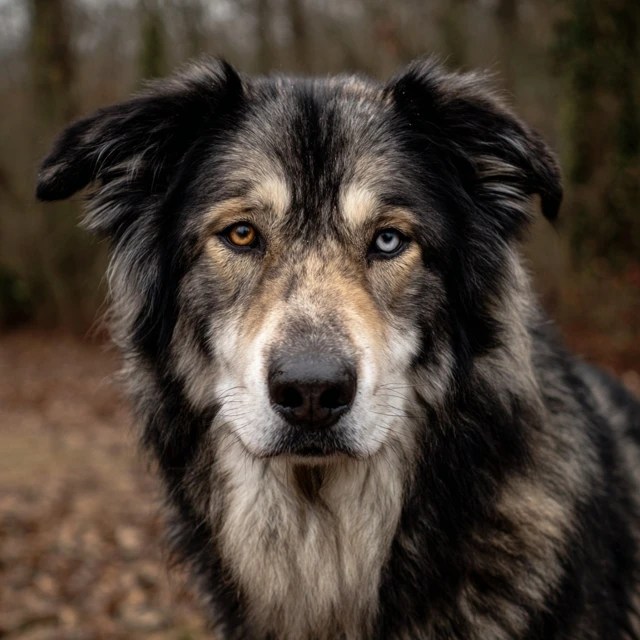
The American Tundra Shepherd may have black, yellow, orange, brown, or hazel eye color. Eye color variability is greater in ATS lines than in pure shepherds due to historical wolf ancestry. However, blue eyes, albinism, and mismatched pigmentation are still discouraged. Eye shape ranges from almond to oval; round eyes are discouraged. Ear leather should be strong enough to stand on its own without taping.
Ears
These should be large, upright, and angled slightly upward or slightly downward. The ATS should project confidence and intelligence.
Chest
This should be powerful and extend to the elbows or below.m
Coat
The American Tundra Shepherd’s coat can be either short, intermediate, or long. However, with long-haired dogs, the coat should not exceed 4 inches.
Legs
These must be strong, well-developed, and large. Both front and back legs must be the same size.
Hocks
The hocks must be long and angulated, built for sure-footedness and speed.
Gait
The American Tundra Shepherd has powerful, well-balanced movement.
Tail
This can be bushy, down, or slightly bent. It should extend from the hocks and further, but should not reach the ground. It should also not curl over the back into a complete curl.
Back
The back must be strong and level, and must be longer than the dog’s height. It all must be supported by the dog’s strong hips and thighs.
The ATS gait resembles the GSD’s “extended trot,” though with less exaggerated rear angulation and smoother ground coverage. The strong hock, powerful shoulders, and straight back allow for long-distance endurance rather than explosive sprinting.
Movement is ground-covering, efficient, and similar to old DDR/Czech shepherd lines. The strong, level back (not sloped like modern AKC GSDs) allows for powerful distance movement.
Coat length variations correspond to working suitability:
- Short coats for speed and heat tolerance
- Intermediate coats for all-weather versatility
- Long coats for cold-climate work; however, excessive feathering is discouraged because it impedes ice shedding.
The ATS stands out for its combination of size, trainability, and endurance, showing greater stability and predictability than wolfdogs and a more balanced temperament than the Caucasian Shepherd. Continue to part 2: American Tundra Shepherd.
Training Expectations for the American Tundra Shepherd Dog

Training the American Tundra Shepherd dog requires a balanced approach that combines consistency, patience, and positive reinforcement. While this breed is highly intelligent and capable of learning advanced commands, the American Tundra Shepherd dog can also display independent thinking, making early training and socialization essential. Structured routines, obedience work, and scent-based activities help channel the natural drive of the American Tundra Shepherd dog into productive behaviors.
Because the American Tundra Shepherd dog is often compared to wolf-like dog breeds, many owners underestimate the importance of controlled exposure to new environments, people, and animals. Proper training ensures that the American Tundra Shepherd dog develops into a stable, confident companion rather than a reactive or overly territorial dog. For best results, owners should focus on long-term behavioral development, consistent boundaries, and ongoing enrichment tailored to large working dog breeds.
Is the American Tundra Shepherd Dog Right for Your Lifestyle?
The American Tundra Shepherd dog is not a casual companion breed—it is a large, highly intelligent working dog that thrives in structured environments with experienced handling. This breed requires daily physical activity, mental stimulation, and clear leadership to remain stable and well-adjusted.
Prospective owners should evaluate whether they can provide consistent training, secure containment, and a purposeful routine before bringing an American Tundra Shepherd dog into their home.
Unlike many common family dogs, the American Tundra Shepherd dog is best suited for active households, rural properties, or working environments where it can perform tasks such as tracking, perimeter monitoring, or endurance-based activities.
Owners searching for a rare dog breed with strong guardian instincts and high stamina will find the American Tundra Shepherd dog rewarding—but only when its exercise needs, behavioral structure, and training requirements are fully met.
American Tundra Shepherd Rescue: What to Know Before Adopting
Finding an American Tundra Shepherd dog through rescue can be challenging due to the breed’s rarity and inconsistent labeling. In many cases, an American Tundra Shepherd dog may be listed under broader categories such as “shepherd mix,” “northern breed mix,” or “wolf-like dog,” making it harder for prospective owners to identify this specific breed.
When searching for an American Tundra Shepherd dog, begin with reputable rescue organizations and national adoption platforms, then expand your search to regional groups that specialize in working dogs, northern breeds, or large guardian-type dogs. Because the American Tundra Shepherd dog is sometimes associated with wolfdog terminology, it is essential to verify lineage, request documentation when available, and review local regulations regarding wolfdog ownership in your area before adopting.
Where to look
- National adoption sites that aggregate shelters and rescues (search by “shepherd mix,” “husky mix,” “northern mix,” and “wolf-like”).
- Breed-leaning rescue groups for shepherd and northern breeds, since ATS dogs may be placed through similar channels.
- Local shelters in rural areas often see more large, working-type dogs being surrendered.
- Rescue coordinators and foster-based rescues can often describe behavior more accurately than in a kennel setting.
What to ask before you commit
Because “American Tundra Shepherd” and “wolf-like” labels can be inconsistent, your questions should focus on safety, temperament, and day-to-day management:
- Temperament and handling: How does the dog react to strangers, fast movement, and being touched (ears, paws, collar, grooming)?
- Reactivity and triggers: Does the dog lunge, bark, or shut down around dogs, kids, bikes, or visitors? What are the known triggers?
- Bite history: Has the dog ever bitten or snapped? If yes, what happened, and what was the context?
- Home compatibility: Is the dog safe with cats, small dogs, or livestock? Any prey drive concerns?
- Training foundation: Does the dog reliably respond to sit, stay, come, leash pressure, and recall? What training methods has the rescue used?
- Containment needs: Has the dog tried to escape by digging, jumping, or bolting through doors? What type of fencing worked in foster care?
- Health and records: Are vaccines up to date? Any known hip/elbow concerns, allergies, digestive issues, or medications?
- Energy level: What does a typical day look like for exercise and enrichment, and what happens when the dog is under-stimulated?
- Trial period and support: Is there a foster-to-adopt option, behavior support, or a return policy if the match isn’t right?
A good rescue will welcome these questions. The goal isn’t to “pass” the dog like a test; it’s to set up a safe, realistic match so the dog doesn’t end up bounced between homes.
Conclusion

The American Tundra Shepherd dog (ATS) is often searched alongside wolfdog terms because of its wolf-like appearance, but what matters most is the real-world fit: temperament, adult size, training needs, and health history. If you’re asking “is the American Tundra Shepherd a wolfdog,” focus on verified documentation and responsible ownership expectations rather than labels alone.
Whether you’re researching an ATS breeder or looking for an American Tundra Shepherd rescue in the U.S. or Canada, prioritize stable behavior, early socialization, and clear veterinary records. With consistent training, daily enrichment, and a calm routine, the right ATS can thrive as a loyal companion while staying safe, manageable, and well-adjusted at home.
American Tundra Shepherd Dog (ATS) FAQs
Is the American Tundra Shepherd (ATS) a wolfdog?
Not always and not automatically. Some online sources describe the ATS as “wolf-like,” but that may refer to its appearance and type, not to confirmed wolf ancestry. If wolf content matters for legal or safety reasons, ask for documented lineage and consider a DNA test for additional clarity.
What is the temperament of an American Tundra Shepherd dog?
Temperament is commonly described as intelligent, alert, and bonded to its people, with a protective streak in some lines. Like other working-type dogs, behavior can vary significantly depending on genetics, socialization, and training. A well-socialized dog is more likely to be stable and manageable than one raised without structure.
How big does an American Tundra Shepherd (ATS) get?
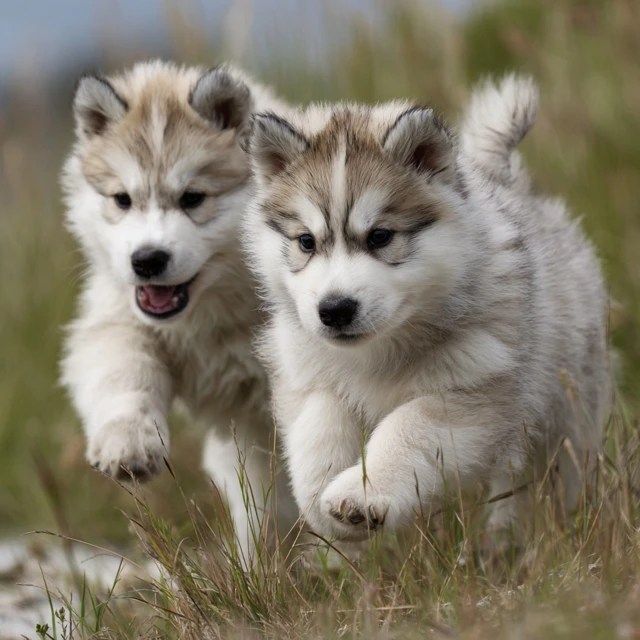
Size can vary because the ATS is not a uniformly standardized, widely documented breed. Most descriptions place it in a medium-to-large range, but height and weight can differ by line. If you’re choosing a puppy, the most practical predictor is the size of the parents and the breeder’s history with adult outcomes.
Are American Tundra Shepherd dogs good family pets?
They can be, but they’re usually best for families who want an active dog and can provide consistent training and daily enrichment. High-drive dogs often need more than casual walks: think structured exercise, mental work, and clear boundaries. For households with young children or frequent visitors, early socialization and calm leadership are even more critical.
How much exercise does an ATS need each day?
Expect a dog that benefits from daily activity and purposeful engagement. Many working-type dogs do best with a combination of physical exercise (walks, hikes, play) and mental work (training sessions, puzzles, scent games). Under-stimulated dogs can become noisy, destructive, or anxious.
Is the American Tundra Shepherd easy to train?
Many owners report that ATS-type dogs learn quickly, but “smart” can also mean independent. Consistent routines, positive reinforcement, and short training sessions tend to work best. If a dog is reactive or fearful, working with a qualified trainer early can make a big difference.
What health issues should I watch for?
Any medium- to large-sized working-type dog may be prone to issues such as joint problems (hips/elbows), allergies, or digestive sensitivity, but risks vary by line. Because ATS documentation can be inconsistent, it’s wise to ask for health testing, veterinary records, and a clear return policy. A proactive relationship with a veterinarian and maintaining a healthy weight can reduce joint strain over time.
Where can I find an American Tundra Shepherd rescue?

Because the ATS is rare, “breed-specific rescue” options can be limited. Start by checking local shelters for northern/shepherd mixes, searching national adoption databases, and contacting specialty groups that focus on wolfdog or northern-type dogs (if the dog is labeled “wolf-like”). When adopting, ask detailed questions about temperament, reactivity, handling, and home requirements.
Is the American Tundra Shepherd recognized by major kennel clubs?
It’s often discussed online as a distinct type, but recognition and standardized records can vary. If registration status matters to you, request documentation and verify which organization (if any) is involved. For most owners, real-world factors like temperament, health history, and training suitability matter more than labels.
For a detailed breakdown of veterinary health risks, genetics, and clinical care, see our full American Tundra Shepherd Health Guide.
© 2012–2025 Claudia Bensimoun, BarkUpToday.com. All rights reserved.
The original article was first published in 2012 and substantially revised, expanded, and updated with new veterinary and breeder information in 2025. No part of this content may be reproduced, distributed, or republished without written permission.
All images on this page were generated with Midjourney. © 2025 Claudia Bensimoun – BarkUpToday.com Generated with Midjourney – commercial license owned by Claudia Bensimoun.