Affiliate disclosure: As an Amazon Associate I earn from qualifying purchases. This article contains affiliate links, which may earn BarkUpToday a commission at no additional cost to you. Read our Affiliate Disclosure for details.
The storm passes, the wind dies down, and then the real test begins. The power is out, the air conditioning is silent, the tap water may not be safe, and your diabetic cat’s insulin is sitting in a refrigerator that’s slowly warming up. For many pet owners, the days after a disaster are harder than the disaster itself.
Long power outages, water supply cuts and disrupted access to medication are some of the most common problems after hurricanes, winter storms and grid failures. This guide explains how each one affects pets and what you can do before and during an outage to keep them safe. If you want to prepare for outages lasting days or weeks, see our two-week plan for power grid failure preparedness.
Quick Answer: How Do You Keep Pets Safe During a Power Outage?
Short answer: Keep pets in the coolest or warmest safe room in the house, watch closely for heatstroke, store enough safe drinking water for every pet, give pets only bottled or boiled-and-cooled water during a boil water advisory, keep refrigerated medications cool without freezing them, and run generators outdoors at least 20 feet from the house. Ask your veterinarian now for a written plan for any medication your pet can’t miss.
- Heat: the biggest danger for pets when the air conditioning fails.
- Water: store it in advance and follow every water advisory for pets too.
- Medications: keep a two-week supply and a cooling plan for anything refrigerated.
- Carbon monoxide: never run a generator or grill indoors or in a garage.
Part 1: When the Power Goes Out
Heat Is the Biggest Danger
In warm climates, losing air conditioning can turn a house into an oven within hours, especially in humid weather after a hurricane. Dogs cool themselves mainly by panting, which works poorly in hot, humid air.
Some pets are at much higher risk. Cornell University’s Riney Canine Health Center notes that short-muzzled breeds such as Pugs, Bulldogs, Boston Terriers and Boxers can’t pant efficiently, and that overweight, elderly and thick- or dark-coated dogs, and those with heart or breathing problems, also need extra care. Early warning signs include heavy panting, seeking shade, whining, reluctance to play and drooling.
- Move pets to the coolest room in the house, usually an interior room on the lowest floor, away from sunny windows.
- Keep fresh water available at all times, and add extra bowls.
- Use battery-powered fans, pressure-activated cooling mats that need no electricity, a cooling vest, and damp (not ice-cold) towels for pets to lie on.
- Skip walks and play during the hottest hours of the day.
- Never leave a pet in a parked car to “use the air conditioning” while you run errands.
Heatstroke is a life-threatening emergency. Cornell lists heavy panting, drooling, vomiting, diarrhea, weakness and collapse among the signs, and treatment means cooling the pet and getting veterinary care immediately. If your home stays dangerously hot, take your pet somewhere with air conditioning: a friend’s home, a pet-friendly hotel, or a veterinary clinic with power.
Cold Weather Outages
Winter storms bring the opposite problem. Keep pets indoors, close off unused rooms to hold heat in one space, and give pets extra bedding and blankets off the cold floor. Self-warming pet beds, which reflect body heat without electricity, and a warm dog coat or fleece pet blanket help small and short-haired dogs. Small, short-haired, very young and senior pets lose heat fastest. Never leave space heaters, fireplaces or candles unattended around pets.
Choose Battery Lights Over Candles

Candles are a fire risk in any home with animals. Swinging tails, jumping cats and nervous dogs can knock them over in the dark. Use LED lanterns, headlamps (handy for walking dogs after dark) and flashlights instead, and keep spare batteries in your emergency kit. A light-up dog collar also makes your dog easy to spot when streetlights are out.
Helping Pets Cope With Storm and Outage Stress
Thunder, howling wind, darkness and a broken routine can leave pets anxious for days. Keep feeding and walk times as normal as you can, give your pet a quiet den such as a covered crate with familiar bedding, and use a battery-powered white noise machine to soften storm sounds. Some owners also use a snug anxiety wrap or vest for noise-sensitive dogs.
For dogs who struggle with storms, some owners ask their veterinarian about calming supplements. Pet Wellbeing’s situational stress range includes Stress Gold, an herbal liquid for occasional high-stress events such as loud noises and travel. Try any calming product well before storm season rather than for the first time during a storm, and check with your veterinarian first, especially if your dog takes other medication. Our guide to dog anxiety signs and triggers has more ways to help.
Generators and Carbon Monoxide
Generators keep fans and refrigerators running, but they also produce carbon monoxide, a colorless, odorless gas. FEMA warns that carbon monoxide can kill people and pets alike. The CDC says never to use generators, grills or other gas-, propane- or charcoal-burning devices inside your home, garage or carport, and to keep generators outdoors at least 20 feet from doors, windows and vents.
Pets are often the first to be affected because they’re closer to the floor and may be confined to a garage or laundry room. Install a battery-powered carbon monoxide detector, and if it sounds or anyone seems drowsy, dizzy or confused, get people and pets into fresh air immediately and call 911. If you want backup power without fumes, a portable power station can run fans and small appliances indoors safely.
Equipment That Stops Working
Outages shut down more than lights. Plan for each of these:
- Electric and invisible fences stop working, and storm damage can knock down regular fences too, so keep dogs leashed outdoors. A GPS dog tracker can help you find a dog that slips away; check that it works with your phone network and charge it before the storm.
- Automatic feeders and water fountains stop dispensing. Switch to plain bowls.
- Well pumps need electricity, so homes on wells can lose water at the same moment they lose power.
- Aquarium heaters, filters and air pumps stop, and fish can be stressed quickly. Battery-operated aquarium air pumps can bridge short outages.
- Heat lamps for reptiles go cold. Ask your exotic-pet veterinarian how to keep temperatures safe without power.
Part 2: When the Water Supply Is Cut or Unsafe

Store Water Before You Need It
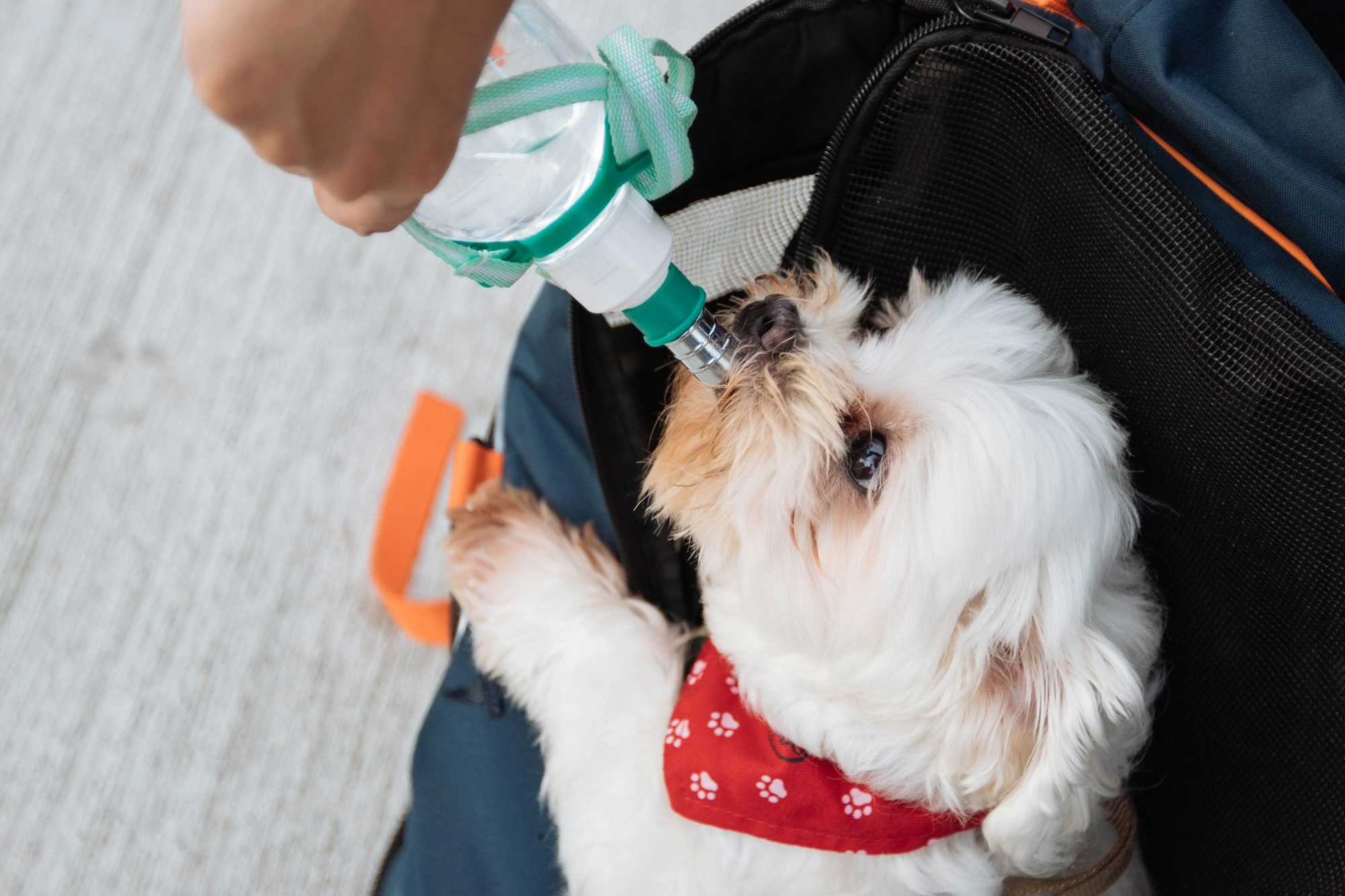
Store drinking water for every pet as well as every person. The ASPCA suggests at least seven days’ worth of bottled water for each person and pet, stored in a cool, dry place and replaced every two months. Stackable emergency water storage containers or collapsible water jugs make this easier. If a storm is forecast, fill bathtubs, sinks and clean containers before the power or water goes off; tub water is useful for cleaning and flushing even if you don’t drink it.
Boil Water and Do-Not-Drink Advisories
Water advisories apply to pets too. Under a boil water advisory, the CDC advises giving pets commercially bottled water or boiled water that has cooled, because pets can get sick from some of the same germs as people and can pass germs to people. To make water safe, the CDC says to bring it to a full rolling boil for one minute (three minutes above 6,500 feet), then let it cool.
- Under a do-not-drink advisory, the CDC lists giving water to pets among the uses that call for commercially bottled water.
- Don’t use water or ice from refrigerator dispensers connected to your water line during any advisory.
- Most household filters don’t remove bacteria or viruses, so boil filtered tap water too.
- Wash pet bowls with bottled or boiled water while the advisory lasts.
Keep Pets Away From Floodwater
Floodwater can carry sewage, chemicals, fuel and debris. Don’t let pets drink from puddles or wade through standing water after a storm, and rinse them with clean water if they do get wet.
Part 3: When Pet Medications Are at Risk
After a disaster, veterinary clinics and pharmacies may be closed for days, deliveries may stop, and refrigerated medications may warm up. For pets with diabetes, heart disease, seizures, kidney disease or other chronic conditions, a missed dose can become an emergency of its own.
Keep a Two-Week Supply
The ASPCA recommends a waterproof container with a two-week supply of any medication your pet needs, plus copies of medical records. A waterproof medication case and a weekly pill organizer make doses easy to track when routines fall apart. Ask your veterinarian whether you can keep a small extra supply on hand, and rotate it so nothing expires. Keep a written list of every medication with the name, strength, dose and your vet’s phone number, and know where the nearest 24-hour emergency hospital outside your area is in case your clinic is closed.
Insulin and Other Refrigerated Medications
Insulin is the medication pet owners worry about most in an outage, and the answer depends on the product. The FDA’s emergency guidance for human insulin says manufacturer-supplied vials and cartridges can be kept unrefrigerated between 59°F and 86°F for up to 28 days and still work. Veterinary insulins are different products with their own storage instructions, so don’t assume the same limits apply to your pet’s insulin.
- Before storm season, read your pet’s insulin package insert and ask your veterinarian how long it can safely stay out of the refrigerator.
- During an outage, keep the refrigerator door closed as long as possible, then move insulin to an insulated cooler with ice packs and a thermometer.
- Never let insulin freeze or touch ice directly; wrap it in a cloth or place it in a separate container inside the cooler.
- Check before every dose. If insulin looks different from normal (clumps, crystals or discoloration), call your veterinarian before using it.
- Never guess or change doses on your own. Call your vet or an emergency hospital if your pet’s insulin may be compromised or your pet shows signs of illness.
The FDA also advises discarding medications that have come into contact with floodwater or contaminated water, so store your pet’s medication supply in a waterproof container.
Refrigerated and Fresh Pet Food
If your pet eats fresh, frozen or raw food, an outage can spoil a week’s supply. Keep a backup bag of a complete-and-balanced dry food your pet already tolerates, and switch gradually if you can. When refrigerated food has warmed up, follow standard food safety advice: when in doubt, throw it out. Read more in our guides to fresh dog food and choosing a healthy dog food.
Your Outage-Ready Pet Kit
These items make long outages far easier on pets and people:
- Portable power stations: quiet, fume-free power for fans, lights and a small refrigerator, safe to use indoors unlike gas generators
- Battery-operated fans and pet cooling mats
- Battery-powered carbon monoxide detectors
- Insulated medication cooler cases, reusable ice packs and a digital thermometer
- Emergency water storage containers and portable pet water bottles
- LED lanterns and a hand-crank NOAA weather radio
For the full list of food, records, carriers and evacuation planning, see our complete guide to pet disaster preparedness.
Before, During and After an Outage
| When | What to do |
|---|---|
| Before | Store at least seven days of water per pet, build a two-week medication supply, get your vet’s written plan for refrigerated medications, buy a battery CO detector, charge power banks and power stations |
| During | Move pets to the safest room, watch for heatstroke or chilling, give only safe water, keep the fridge closed, run generators outdoors only, keep dogs leashed outside |
| After | Check medications before use, discard spoiled food, restock water and supplies, keep pets away from floodwater and debris, call your vet about any illness |
Frequently Asked Questions
Can my dog drink tap water during a boil water advisory?
No. The CDC advises giving pets commercially bottled water or tap water that has been boiled for one minute and cooled, because pets can get sick from some of the same germs as people.
How long can my pet’s insulin stay out of the refrigerator?
It depends on the product. FDA emergency guidance allows many human insulins to stay between 59°F and 86°F for up to 28 days, but veterinary insulins have their own instructions. Check your pet’s package insert and ask your veterinarian before an emergency.
How do I keep my dog cool without air conditioning?
Move your dog to the coolest interior room, provide plenty of water, use battery fans and cooling mats, avoid activity during the hottest hours, and watch for heavy panting, drooling or weakness. If your home stays dangerously hot, move your dog somewhere with air conditioning.
Is it safe to run a generator with pets in the house?
Only if the generator is outdoors, at least 20 feet from doors, windows and vents. Never run it inside the house or garage. Carbon monoxide can kill people and pets, so use a battery-powered CO detector.
How much water should I store for my pet?
The ASPCA suggests at least seven days of bottled water for each person and pet, replaced every two months.
What should I do with medication that got wet in a flood?
The FDA advises discarding medications that have come into contact with floodwater or contaminated water. Contact your veterinarian for a replacement.
The Bottom Line
Most pets get through outages safely when their owners plan for three things: heat or cold, safe water, and medication. Spend an hour before storm season storing water, setting up a medication plan with your veterinarian and putting together a few pieces of backup gear, and a long outage becomes an inconvenience instead of an emergency.
References and Further Reading
- CDC: Drinking Water Advisories
- CDC: Avoiding Carbon Monoxide Poisoning
- FEMA: Keep Your Family, Pets Safe When Using Generators During Power Outages
- FDA: Insulin Storage and Switching Between Products in an Emergency
- Cornell Riney Canine Health Center: Summer Heat Safety Tips for Dogs
- ASPCA: Disaster Preparedness
This article is for educational purposes and is not a substitute for advice from your veterinarian. Follow instructions from your local emergency and public health officials.