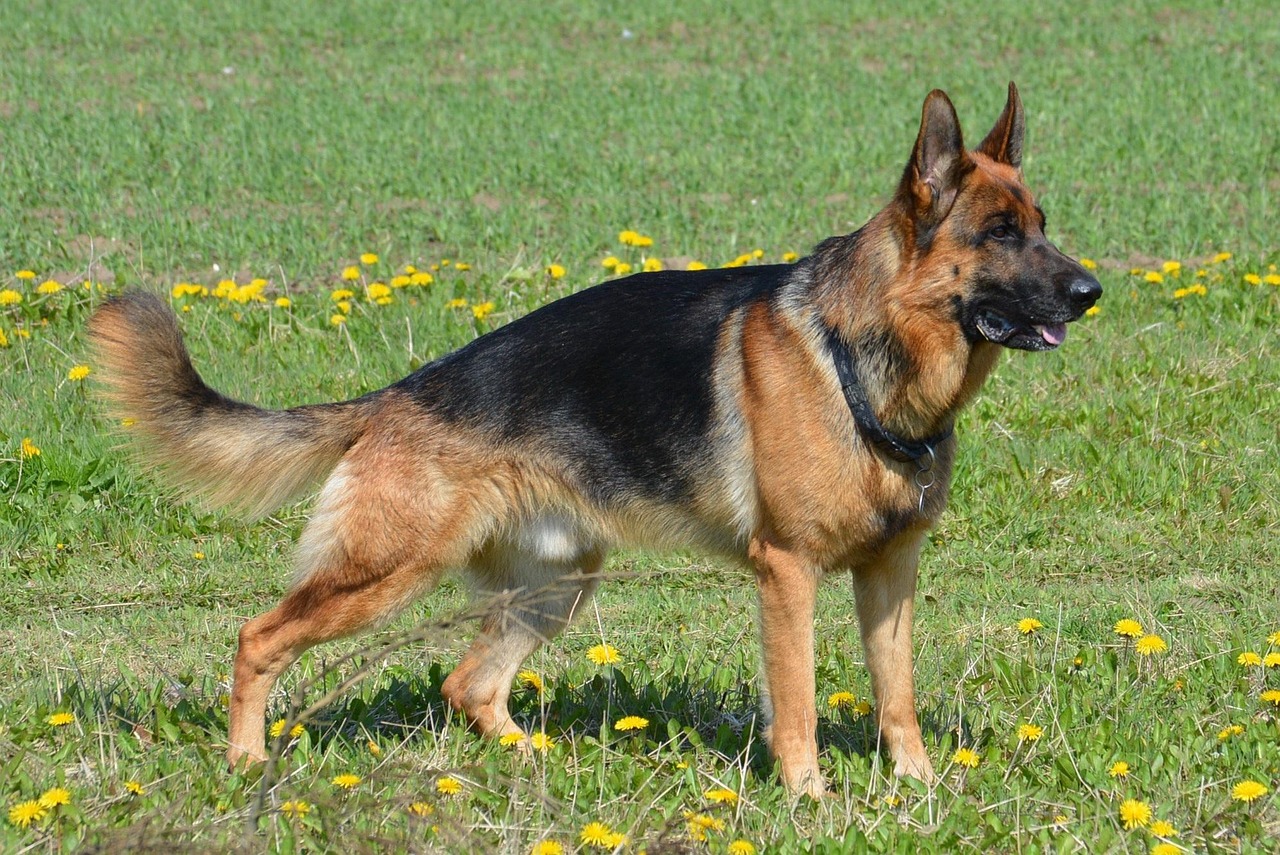
The German Shepherd is a large, intelligent herding and working breed developed in Germany in the late 1800s. It suits experienced, active owners who can provide daily exercise, training and early socialization. Health varies a great deal by breeding line, so choosing a breeder who screens hips, elbows and degenerative myelopathy matters more than which bloodline label a puppy carries.
German Shepherd at a Glance
| Breed group | Herding Group (AKC, recognized 1908) |
| Height | Males 24 to 26 inches; females 22 to 24 inches |
| Weight | Males about 65 to 90 pounds; females about 50 to 70 pounds |
| Life expectancy | AKC lists 7 to 10 years; many well-bred dogs live longer |
| Coat | Double coat, medium or long; black and tan, sable, black and other colors (white is disqualified in AKC conformation) |
| Energy | High |
| Shedding | Heavy, with two major coat blows a year |
| Best for | Experienced, active owners who enjoy training |
History of the German Shepherd
The breed traces back to German cavalry officer Max von Stephanitz, who in 1899 bought a herding dog named Hektor Linksrhein, renamed him Horand von Grafrath, and founded the Verein für Deutsche Schäferhunde (SV) the same year. Horand became the first registered German Shepherd.
Von Stephanitz aimed for an intelligent, versatile working dog. As herding work declined, German Shepherds moved into police, military, guide, search-and-rescue and service roles, where they remain among the most widely used working breeds. The AKC registered its first German Shepherd in 1908.
Temperament and Personality
German Shepherds are loyal, confident and protective, and they tend to bond closely with their families. Many are reserved with strangers, which is part of what makes them good watchdogs, but it also means early, ongoing socialization is essential.
They are highly intelligent and eager to work. Without enough exercise and mental challenge, they can become bored, vocal or destructive. Temperament varies by line: high-drive working lines usually suit experienced handlers, while many show-line dogs have more moderate drive. The bloodline section below explains these differences in detail.

Exercise and Training
Most adult German Shepherds need at least an hour of physical activity a day, plus mental work such as training, scent games or puzzle feeders. Good outlets include brisk walks, hiking, fetch, tracking, herding, obedience, agility and IGP.

They learn quickly with reward-based training. Start puppy classes early, focus on calm greetings, loose-leash walking and a reliable recall, and keep training going through adolescence, when many young Shepherds test limits. Avoid forced, repetitive high-impact exercise for growing puppies.
Grooming and Shedding
German Shepherds shed year-round and heavily during seasonal coat blows. Brush several times a week, and daily during heavy shedding, with an undercoat rake or slicker brush. Bathe only as needed, trim nails regularly, and check ears, especially in long-coated dogs.
Is a German Shepherd Right for You?
- A good fit if you want an active, trainable companion, have time for daily exercise and training, and can handle a large, strong dog.
- Think twice if you want a low-shedding or low-energy dog, are away for long hours, or can’t commit to ongoing socialization.
- Choose carefully: pick a breeder or rescue whose dogs’ energy level and temperament match your home, and ask to see health testing for both parents.
Health Summary: German Shepherd Health by Bloodline

This section compares health across DDR (East German), Czech, West German, American and White Swiss Shepherd lines, looking at orthopedic disease, degenerative myelopathy, digestive disorders, allergies and lifespan.
German Shepherd lifespan and health are influenced not only by disease risk, but also by whether breeders prioritize hip and elbow screening, degenerative myelopathy (SOD1) testing, and long-term functional soundness. Breeding priorities can either protect or compromise a dog’s long-term quality of life.
German Shepherds remain one of the most versatile and widely bred working dogs in the world, but they are also one of the more medically complex breeds. Health profiles vary depending on bloodline, breeding purpose, conformation, and the registry rules under which dogs are bred. This section covers:
- Why some lines show better joint stability than others
- How degenerative myelopathy persists in certain breeding pools
- Why digestive disorders such as EPI and IBD appear more often in some family lines
- How structure, stress, workload and breeder screening affect disease
For the full side-by-side, see our comparison of Czech vs. American German Shepherd lines.
Registries and How Breeders Operate
White Shepherd / Berger Blanc Suisse
White Swiss Shepherds, like standard German Shepherds, are prone to health issues, but these depend more on responsible breeding practices than on coat color. Likewise, American show-line German Shepherds have health outcomes that vary widely because health testing is optional, whereas SV- and FCI-regulated programs tend to produce more predictable results.
The breed standard of the White Swiss Shepherd differs from that of the German Shepherd Dog. “Over the last 50 years, the White Swiss Shepherd has honed its distinct type across its gene pool to align with its Thuringian origins that were predecessors to the GSD,” explains the White Swiss Shepherd Club, describing “strong toplines without slope, higher head carriage, front and rear assemblies with more open angles.”
- AKC (USA): A white puppy from two AKC German Shepherd parents can be registered as a German Shepherd Dog, but white is a disqualifying color in the AKC conformation ring. These dogs can compete in performance events such as obedience, agility, herding, rally and scent work.
- UKC (United Kennel Club): Recognizes the White Shepherd as a separate breed with its own standard, and supports conformation showing and performance sports.
- FCI and many European countries: Recognize the White Swiss Shepherd Dog (Berger Blanc Suisse) as a distinct breed, not just a color of GSD.
How breeders operate: Serious White Shepherd and Berger Blanc breeders typically work within UKC or FCI frameworks, and many follow GSD-style health testing (hips, elbows, DM, sometimes EPI and eyes). Breeders who sell whites only as “rare AKC GSDs” without health testing are a red flag.
DDR vs Czech German Shepherd Health
- DDR (East German): Breeding was state-controlled in East Germany for about 40 years. Dogs were selected for health, resilience and performance in work roles such as border, military and police service. They were heavily boned, straight-backed, darkly pigmented, and tested hard before breeding.
- Czech lines: Developed in Czechoslovakia’s state-run Border Patrol (Pohraniční Stráž) kennels, where dogs patrolled long, difficult borders and were selected for endurance, strong nerves and reliability under stress.
Today: Many breeders market “pure DDR” or “Czech working” lines. The best kennels still emphasize X-rayed hips and elbows, DM testing, working titles (IGP, PSA) and solid temperament, but quality varies substantially by breeder.
West German Working and Show Lines
West German lines are regulated by the SV (Verein für Deutsche Schäferhunde). To be bred under SV rules, dogs generally must:
- Have approved hip and elbow ratings (the “a” stamp or equivalent)
- Pass a breed survey (Körung) covering conformation and temperament
- Earn a working title (IGP) for many breeding programs
West German working-line breeders emphasize performance and nerves; West German show-line breeders balance appearance with the required working titles and health tests.
American Lines
- In the US and Canada, breeding is mostly under AKC or CKC registration, and no working or health tests are required.
- Many show kennels select for a sweeping side gait and a sloping topline, which can increase orthopedic stress.
- Some excellent American breeders voluntarily complete OFA or PennHIP evaluations and DM testing, but these are not mandated.
Health Risks by Age
Puppy (0 to 18 months)
- Growth plate injuries from over-exercise
- Early digestive sensitivity
- Poor early nutrition, which can affect lifelong orthopedic health
Adult (2 to 6 years)
- Hip and elbow dysplasia becoming apparent
- Onset of exocrine pancreatic insufficiency (EPI)
- Allergies and autoimmune conditions emerging
Senior (7+ years)
- Degenerative myelopathy
- Lumbosacral disease
- Arthritis and declining mobility
Orthopedic Disease
Across the general German Shepherd population, roughly 20% of dogs in the OFA database have some degree of hip dysplasia. That average hides real differences between carefully tested working and show lines and untested pet-market or backyard lines.
Berger Blanc Suisse / White Shepherd
- Breeder practices: Responsible breeders in UKC and FCI systems typically X-ray hips and elbows, test for DM (SOD1), and sometimes screen for EPI if it appears in a line.
- Hip and elbow dysplasia: Similar risk to standard German Shepherds, often lower in carefully selected European-style programs.
- Degenerative disc and lumbosacral disease: Reported but not unusually common; risk rises with age and activity.
- Structure: Straighter toplines and moderate angulation tend to distribute weight more evenly than in extremely sloped American show dogs.
DDR and Czech Working Lines
- Breeder practices: Historic programs removed dogs with structural weakness or poor performance from breeding. Many modern working kennels still require approved hips and elbows plus working titles.
- Orthopedic profile: Heavy bone and straighter backs give good load distribution, but demanding work such as bite work, jumping and scaling walls makes wear-and-tear arthritis common in older working dogs.
- Screening: Working prospects often get preliminary hip and elbow X-rays at 6 to 12 months and final evaluations at 2 years. Core strength, controlled impact and conditioning help active dogs stay sound.
West German Working and Show Lines
- Working lines: Generally balanced angulation and an athletic build. Orthopedic problems usually stem from breeders relaxing standards or from overuse injuries in sport dogs.
- Show lines: More rear angulation, though SV rules still require dogs capable of IGP work. Over-angulated individuals can show early hip pain, stifle strain and reduced jumping ability.
- Care: Regular orthopedic checks, sensible competition schedules, warm-ups and cool-downs, and avoiding repeated jumping on hard surfaces.
American Show Lines
- Breeder pattern: Heavy emphasis on a sweeping side gait and outline, with the sloping topline becoming extreme in some lines. Health testing is optional; some breeders complete OFA or PennHIP, DM and thyroid testing, while others breed on appearance alone.
- Orthopedic impact: Exaggerated angulation can overload hips and stifles and change lumbosacral angles, which may predispose dogs to cruciate tears and chronic hip pain.
- Priorities: Screen hips, elbows and the lumbosacral spine early, favor low-impact conditioning, avoid repeated high jumps, and keep dogs lean.
Degenerative Myelopathy (DM)
- German Shepherds are one of the classic breeds for DM, and many lines carry the SOD1 mutation.
- DNA tests identify genetic risk, but not every at-risk dog develops the disease.
- Breeding best practice: Test breeding dogs and avoid pairings that produce at-risk puppies.
- If signs appear (knuckling, a wobbly hind end), early rehabilitation can help extend quality of life. Talk to your veterinarian promptly.
No line is free of DM. What matters most is whether a breeder uses DM testing to plan matings, whatever the bloodline label.
Exocrine Pancreatic Insufficiency (EPI)
- German Shepherds are among the breeds most commonly affected by EPI, and it occurs in all lines.
- White Shepherd and Berger Blanc clubs acknowledge EPI as a potential issue; responsible breeders track affected lines and avoid doubling up on them.
- Historically, dogs with chronic digestive problems were less likely to stay in DDR, Czech and West German working breeding programs.
- Management: EPI is diagnosed and treated by a veterinarian, usually with enzyme replacement, a highly digestible diet and B12 monitoring. Many affected dogs live good lives with proper care.
IBD, Chronic Enteropathy and Food Sensitivities
- Present across all lines; often worsened by stress, poor diet, parasites or environmental triggers.
- Responsible breeders remove chronically affected dogs from breeding, or at least avoid line-breeding on them.
Bloat (Gastric Dilatation-Volvulus)
- All deep-chested shepherds carry a meaningful risk of GDV, a life-threatening emergency.
- Feeding multiple smaller meals, slowing fast eaters, and avoiding large meals right before intense exercise may help reduce risk.
- Ask your veterinarian whether a preventive gastropexy during spay or neuter makes sense for your dog.
Skin and Allergies
- White Swiss Shepherd: On a white coat, redness and staining show up quickly, which can help owners spot skin problems early. Breed clubs list allergies, sensitive skin and autoimmune thyroiditis as issues to monitor. Regular grooming helps prevent hot spots, and pink noses and ears may need sun protection in high-UV regions.
- All lines: Atopic dermatitis, flea allergy and food allergy can occur, and some lines have higher rates of chronic ear infections and paw licking. Your veterinarian can help identify triggers and treatment options.
Temperament and Behavior by Line
Berger Blanc Suisse / White Shepherd
Many programs breed for a softer, family-friendly and highly social dog that is still trainable. These dogs are often polite and people-oriented, can develop separation anxiety if left without enough company, and need mental work such as trick training, scent games or light sport.
DDR and Czech Working Lines
Selected for serious work: high prey and defense drive, strong nerves, and natural suspicion of strangers. They are often excellent when well trained but need early socialization, ongoing training and experienced handling. These dogs are a poor fit for low-activity pet homes.
West German Working Lines
Balanced working drive, suited to IGP, search and rescue and dog sports. Often confident but manageable, and a great match for experienced, active homes.
West German Show Lines
Bred for a stable, clear temperament along with appearance. Often a good fit for families who want a classic German Shepherd with moderate drive.
American Show Lines
Generally lower working drive than European working lines. Temperament varies widely by breeder, so meet the parents and ask about temperament testing and socialization.
Final Thoughts
The German Shepherd rewards owners who can match its intelligence and energy with daily exercise, training and companionship. Health by bloodline is shaped by genetics, breeder selection, and the rules under which each line is produced, which helps explain why orthopedic disease, degenerative myelopathy and digestive disorders appear more often in some lines than others.
When choosing a German Shepherd, compare breeders’ actual health testing, longevity and temperament rather than relying on a bloodline label or reputation alone.
German Shepherd FAQs
Are German Shepherds good family dogs?
Often, yes, with training and socialization. They’re loyal and protective, and high-drive working lines are usually better suited to experienced handlers.
How much exercise does a German Shepherd need?
Most adults need at least an hour of activity a day, plus training or scent games to keep their minds busy.
Do German Shepherds shed?
Heavily. Expect year-round shedding and two big coat blows a year, and plan on brushing several times a week.
What is the healthiest German Shepherd bloodline?
No line is automatically healthiest; breeder practices matter more than lineage. DDR and Czech working lines have a tradition of strict selection for soundness, and West German lines bred under SV rules require hip and elbow certification and temperament testing. White Swiss Shepherds bred to FCI or UKC standards also tend to do well. Health varies most in American show lines, where testing is optional.
Are White Swiss Shepherds healthier than standard German Shepherds?
Not inherently. They often benefit from more moderate structure than American show lines, and their white coat (caused by a recessive variant of the MC1R gene) does not increase disease risk. Outcomes depend on hip and elbow screening, DM testing and responsible breeding.
Which German Shepherd line is best for families with children?
White Swiss Shepherds and West German show lines are often bred for balanced drive and stable temperaments, which can suit family life. American lines can also work well if the breeder prioritizes temperament and avoids extreme conformation. Every dog still needs socialization and training.
Why do working-line German Shepherds have more physical injuries?
Working-line dogs are bred and trained for intense activity: jumping, gripping, tracking and scaling obstacles. These demands raise the risk of wear-and-tear injuries such as cruciate ligament tears, soft-tissue strains and arthritis. With good conditioning and sensible training schedules, many stay sound into old age.
What health tests should German Shepherd breeders perform?
- Hip evaluation (OFA, FCI, SV or PennHIP)
- Elbow evaluation
- Degenerative myelopathy (SOD1) DNA test
- Cardiac and eye exams where recommended, and a thyroid panel
- Family history of EPI and IBD
- Temperament or working evaluations (IGP, herding, CGC or similar)
Related reading: Labrador Retriever breed guide and Golden Retriever breed guide.
Photos: Lewis Collard, via Wikimedia Commons; Ron Armstrong, CC BY 2.0, via Wikimedia Commons; Richard Gruber, CC0, via Wikimedia Commons.
First published in 2012. Updated October 2026. © 2012–2026 BarkUpToday. All rights reserved.
Leave a Reply