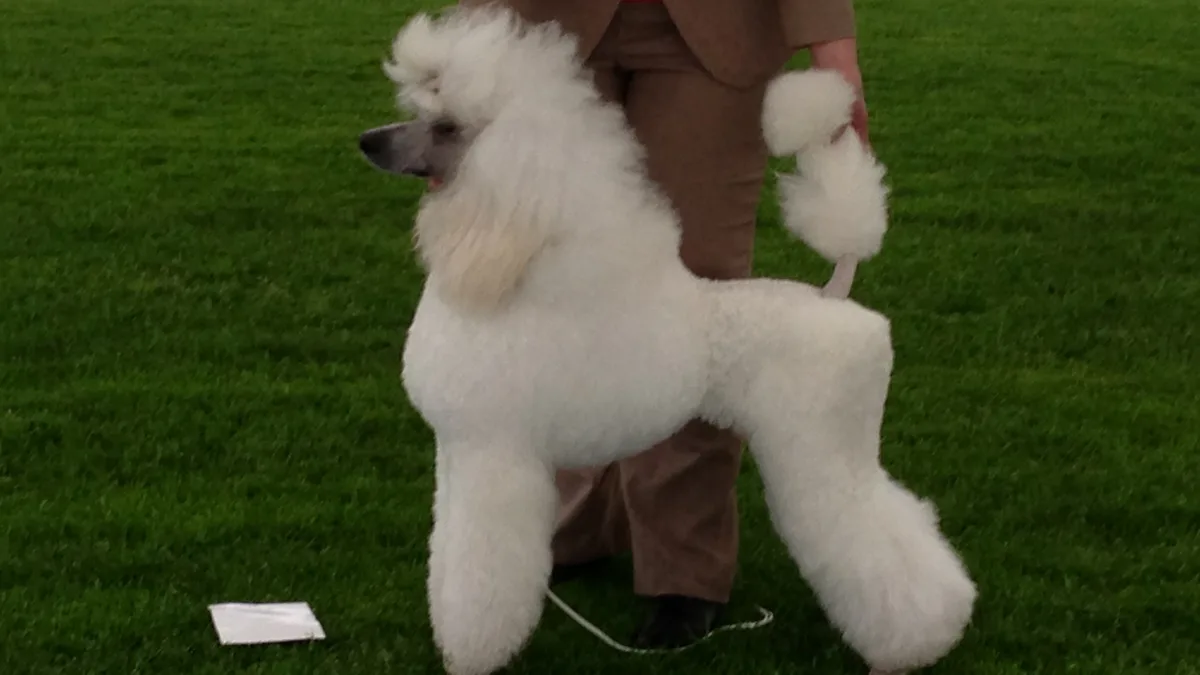
Not completely — no dog is. According to PetMD, there is no such thing as a completely hypoallergenic dog, but Poodles shed far less than most breeds, so far less loose hair ends up around the home. According to the AKC, Poodles shed minimally, which makes them a good choice if allergies are a concern. The catch is upkeep: that famous curly coat traps what it sheds, and it needs daily brushing and regular clipping to stay comfortable. This guide covers all three sizes, plus standards, care, health and daily life.
Poodle quick facts
Sizes and lifespan below are the AKC’s published figures; coat colours are as listed by PetMD.
| Height | Standard: over 15 inches · Miniature: 10–15 inches · Toy: up to 10 inches |
| Weight | Standard: 40–70 lb (males 60–70, females 40–50) · Miniature: 10–15 lb · Toy: 4–6 lb |
| Lifespan | 10–18 years |
| Coat | Dense, curly, continuously growing; sheds very little |
| Colours | Black, white, red, silver, brown and parti-colour, among others |
| Temperament in three words | Intelligent, active, people-oriented |
| Group | Non-Sporting (Standard and Miniature) and Toy (Toy Poodle) — AKC |
| Originally bred for | Water retrieving |
Breed standards and recognition
AKC (American Kennel Club). According to the AKC, the Poodle comes in three varieties: the Standard and Miniature in the Non-Sporting Group, the Toy Poodle in the Toy Group. The AKC recognised the Poodle in 1887. Its published sizes: Toy up to 10 inches, 4–6 lb; Miniature 10–15 inches, 10–15 lb; Standard over 15 inches, 40–70 lb; lifespan 10–18 years.
UKC (United Kennel Club). According to the UKC, the breed is registered as two separate breeds: the Standard Poodle (including the Multi-Colored Standard Poodle) in the Gun Dog Group, and the Poodle — Miniature and Toy, including Multi-Colored — in the Companion Group. The UKC recognised the Poodle in 1914 and split it into the two breeds on January 1, 2000.
FCI (Fédération Cynologique Internationale). According to the FCI, the Poodle (Caniche) is standard N° 172, in Group 9 (Companion and Toy Dogs), Section 2 (Poodle), with origin France. The FCI recognises four sizes: Standard (over 45 up to 60 cm), Medium (over 35 up to 45 cm) — a fourth size the AKC does not have — Miniature (over 28 up to 35 cm) and Toy (over 24 up to 28 cm). The FCI accepted the breed on a definitive basis in 1955.
Where does the Poodle come from?
According to PetMD, Standard Poodles are athletic water dogs that were originally bred to hunt waterfowl — the original size, with the Miniature and Toy as its smaller companion versions. According to the AKC, the Poodle is the national dog of France, and the FCI standard likewise gives France as the breed’s origin. The elaborate show trims are the polished descendants of a working retriever’s clip; most pet Poodles today wear a far simpler short trim.
What is a Poodle’s temperament like?
According to PetMD, Poodles are generally kind, friendly dogs that are eager to please and highly trainable with positive reinforcement — and they rank among the smartest breeds. According to the AKC, the breed is intelligent and people-oriented, usually friendly with strangers and highly adaptable. That brain needs work: according to PetMD, a bored Poodle can develop unwanted behaviours such as excessive barking or digging, and the AKC likewise notes the breed can be more vocal than some. With children, according to PetMD, Poodles typically do well once their energy has an outlet — but an exuberant Standard can accidentally knock over a small child in play, so children and dogs should always be supervised together.

How much care does a Poodle need?
Exercise
According to PetMD, a Standard Poodle needs at least one to two hours of exercise every day, and mental stimulation matters just as much — puzzle toys, sniffing walks, and training woven through the day. The breed thrives in sports such as agility, dock diving and flyball. Smaller varieties need less in total, but the same daily mix. For working out how much is enough for your dog, see our guide to how much exercise a dog needs.
Grooming
This is the breed’s biggest commitment. According to PetMD, the coat needs brushing every day with a slicker brush to prevent matting, plus professional grooming every six to eight weeks to keep the fast-growing hair tangle-free. PetMD also advises bathing about once a month with a dog-safe shampoo, drying the coat completely afterwards, and cleaning the ears after baths and swimming, as Poodles are prone to ear infections secondary to allergies. A short pet clip is far easier to live with than a long show coat. For what regular coat care does for skin and comfort, see our post on the benefits of regular dog grooming.

Feeding
According to PetMD, athletic Standard Poodles need a nutritionally complete diet made for large breeds, fed in two meals a day. A slow feeder bowl can stop a Poodle eating too quickly, lowering the risk of vomiting and bloat. Because Poodles are lean and predisposed to hip dysplasia, PetMD stresses matching calories to lifestyle rather than overfeeding — the right amount depends on weight, age and activity, and your veterinarian can advise. Toy and Miniature Poodles follow the same principles in smaller portions.
What health problems do Poodles get?
According to PetMD, the Poodle is generally a healthy breed, and reputable breeders screen for inherited conditions. The issues PetMD says owners should watch for are:
- Hip dysplasia — a genetic looseness of the hip joint that can lead to pain and arthritis; signs include limping, difficulty standing and a bunny-hopping gait.
- Idiopathic epilepsy — a seizure disorder; in Poodles, seizures usually begin between 2 and 5 years of age and can be controlled with medication.
- Von Willebrand disease — a blood-clotting disorder that is more common in Poodles, though rare overall; a DNA test can detect it.
- Sebaceous adenitis and other skin conditions — an autoimmune condition that attacks the skin’s oil glands, alongside skin infections secondary to allergies and benign sebaceous cysts.
- Bloat (gastric dilatation-volvulus) — in deep-chested Standards, the stomach can fill with gas and twist. According to PetMD, this is a life-threatening emergency: a swollen stomach, drooling, pacing and retching without vomiting mean a veterinarian immediately. A preventive gastropexy, often done at spay or neuter, can reduce the risk.
So are Poodles really hypoallergenic?
The honest answer sits between the marketing and the myth-busting. According to PetMD, no dog is completely hypoallergenic. What the Poodle offers is less spread: according to the AKC, the breed sheds minimally, so far less hair is released around the home than from a heavy-shedding breed — a difference many allergy sufferers find is enough. The answer is the same for all three sizes, because the coat does not change with size — only the amount of dog, and of grooming. If allergies are the reason a Poodle is on your list, spend real time with the breed before committing, keep up the brushing and bathing that keep loose hair and dander down, and talk to your doctor.
Living with a Poodle — is it right for you?
According to PetMD, Standard Poodles suit active homes — multiple adults and/or older children who will play with the dog daily — and a fenced yard is ideal but not essential. A Poodle is likely right for you if you want a clever, athletic companion, enjoy training and dog sports, and can commit to daily brushing plus professional grooming every month or two, in time and in budget. Think twice if you want a low-maintenance coat, a quiet, sedentary companion, or a dog content to be left to its own devices — an under-exercised, under-groomed Poodle is an unhappy one. Whichever size you choose, a collar chosen for fit and safety matters — our dog collar guide walks through how to choose.
Frequently asked questions
Do Poodles shed?
Barely. According to the AKC, Poodles shed minimally. Loose hair tends to stay caught in the curls rather than falling around your home — which is why, according to PetMD, the coat needs daily brushing to stop it matting.
How big do Poodles get?
It depends on the variety. According to the AKC, Toy Poodles stand up to 10 inches and weigh 4–6 lb, Miniatures stand 10–15 inches and weigh 10–15 lb, and Standards stand over 15 inches and weigh 40–70 lb.
How long do Poodles live?
According to the AKC and PetMD, the Poodle lifespan is 10–18 years across the varieties.
Are Poodles good family dogs?
Yes, with the right family. According to PetMD, Poodles are generally good family dogs — friendly and playful — as long as their exercise and mental needs are met and children are supervised, especially around a bouncy Standard.
How much grooming does a Poodle need?
More than almost any breed. According to PetMD, daily brushing and professional grooming every six to eight weeks is the baseline for every variety; a short pet clip makes the routine far easier.
Photo credits: white Standard Poodle in show trim on grass — Sagaciousphil, CC BY-SA 3.0, via Wikimedia Commons; red Standard Poodle resting on a leather chair — Don Ramey Logan, CC BY-SA 4.0, via Wikimedia Commons; apricot Standard Poodle being clipped on a grooming table — daveynin, CC BY 2.0, via Wikimedia Commons.
Leave a Reply